
If you’re looking for a spot that balances a quiet, wooded atmosphere with serious commuter convenience, Southeast Manchester often rises to the top of the list. Situated generally east of South Willow Street and bordered by I-93, Holt Avenue, and the Auburn town line, this area feels distinct from the dense city grid.
It’s a neighborhood where you can drive down Bodwell Road and see towering pines and glimpse Crystal Lake, yet be five minutes from the busiest shopping corridor in the state. For buyers in 2026, the real draw here is the ability to live a calmer, suburban lifestyle without adding thirty minutes to your commute. It’s a “best of both worlds” scenario for anyone who needs to hit I-93 quickly but wants to come home to a backyard with actual grass.
Southeast Manchester Real Estate Market Trends (2026)
Let’s talk numbers. As we settle into early 2026, the Southeast Manchester real estate market remains competitive. While we aren’t seeing the frenzy of a few years ago, inventory is still tight. When a home is priced correctly—meaning it aligns with recent comps rather than aspirational numbers—it typically goes pending in about 12 to 25 days.
Pricing here offers a solid value proposition, especially compared to the historic North End or the newly constructed subdivisions in neighboring towns like Londonderry or Auburn. Values have appreciated steadily over the last year, driven largely by buyers who are priced out of the Boston metro but still need to commute there a few days a week.
If you are looking at Southeast Manchester homes for sale, here is what you can roughly expect for costs right now:
- Median Sale Price: Most move-in ready single-family homes are landing in the $475,000 – $515,000 range.
- Price Per Sq Ft: You are generally looking at $250 – $290 per square foot, depending on updates.
- Rental Market: If you aren’t ready to buy, be aware that single-family rentals are in high demand here. Unlike the Southside, which has more apartment complexes, the Southeast rental stock is mostly individual houses, and they move fast.
Housing Styles and Architecture
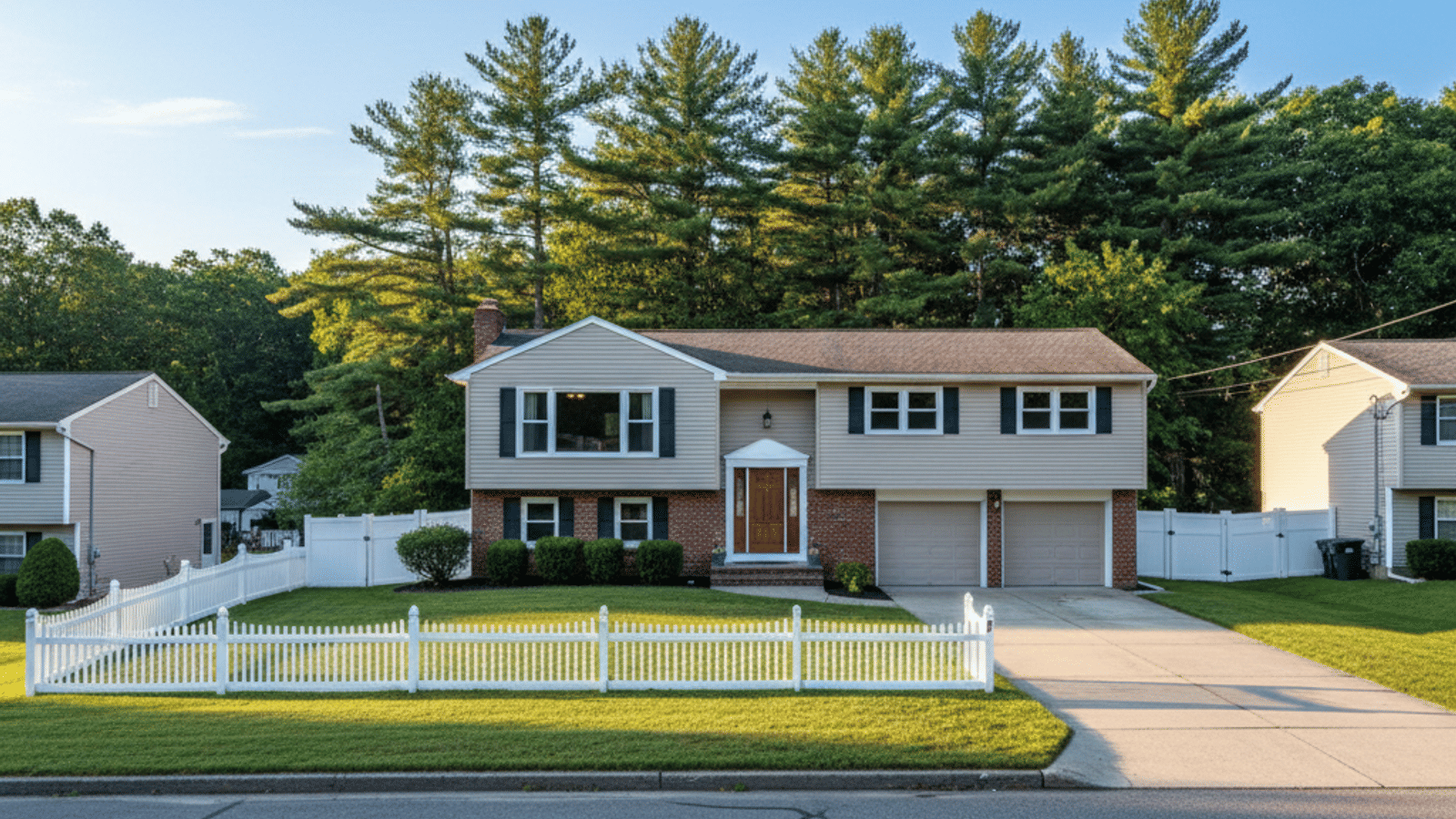
The housing stock in this part of town tells the story of Manchester’s expansion in the mid-to-late 20th century. You won’t find many Victorian turn-of-the-century homes here. Instead, the streets are lined with 1970s and 1980s Raised Ranches, Split-Levels, and Capes. These homes were built for practicality and longevity, often featuring good-sized basements and attached garages.
One of the biggest perks of living in Southeast Manchester NH is the land. Lot sizes here are generally larger than what you find on the West Side or in the inner city grid. It is common to find lots ranging from 0.25 to 0.5 acres, which gives you enough room for a garden, a swing set, or a fenced area for dogs without requiring a riding mower.
New construction is scarce. Because the area is established, “new” homes are usually the result of infill on a rare vacant lot or a complete renovation of an existing property. While there are some condo pockets, particularly near Wellington or South Mammoth Road, the heart of this neighborhood is definitely single-family oriented.
Parks, Recreation, and Nature Access
For many residents, the access to water and woods is the deciding factor. This neighborhood feels “green” in a way that the city center does not.
Crystal Lake Park is the neighborhood’s local hangout. It is a fantastic spot for swimming during the summer, and the city maintains a bathhouse and beach area there. It’s also popular for fishing and small boating. If you enjoy kayaking or paddleboarding after work, having this resource in your backyard is a huge lifestyle lift.
Just a bit further east, you hit Lake Massabesic. You cannot swim here (it’s the city’s water supply), but the views are stunning. The trails around the watershed and the Rockingham Recreational Trail are perfect for walking, running, or biking. It feels miles away from urban life.
For organized sports, nearby Precourt Park and Nutts Pond offer fields for leagues. And for winter enthusiasts, the McIntyre Ski Area is just a short drive north, making it easy to get a few runs in on a Tuesday night.
Schools and Education
Understanding the school feeder pattern is essential for many households relocating to Manchester. In the Southeast section, the schools generally have a strong reputation within the district.
- Elementary: Most of the neighborhood is zoned for Green Acres Elementary School, which is well-regarded locally and often a specific search criteria for buyers.
- Middle: Students typically move on to Henry J. McLaughlin Middle School.
- High: The designated high school is Manchester Memorial High School.
Of course, boundaries can be tricky, especially near the edges of the neighborhood. I always recommend that buyers verify the specific zoning for any house they are serious about directly with the Manchester School District. There are also private and charter options nearby, such as Holy Family Academy, for those exploring alternatives.
Shopping and Dining Convenience
Living here means you have a front-row seat to convenience, but you are set back enough to avoid the noise. South Willow Street (Route 28) is the commercial spine of the city and sits just on the western edge of the neighborhood. This is where you’ll find the Mall of New Hampshire, major big-box retailers, and pretty much every chain restaurant imaginable.
However, locals know the real gems are often the long-standing staples. The Puritan Backroom, famous for its chicken tenders and mudslides, is practically a neighborhood landmark sitting right on the edge of the area.
Grocery runs are easy with multiple options like Hannaford and Market Basket within a 5-10 minute drive. You can do your Saturday morning errands quickly and retreat back to your quiet street before the midday traffic really picks up.
Commuting and Transportation
For commuters, Southeast Manchester is arguably one of the most strategic locations in Southern New Hampshire. You have immediate access to I-93 via Exits 6 and 8, as well as Route 101. This allows you to bypass the often-clogged city center bridges that West Side residents have to deal with.
- Boston Commute: If you are heading into Boston, expect a drive of about 50 to 60 minutes. It is traffic-dependent, of course, but very manageable for hybrid workers going in a few times a week.
- Airport Proximity: The Manchester-Boston Regional Airport (MHT) is incredibly close. This is a dream for frequent flyers. However, we should be transparent about the noise. Depending on exactly where a home is located relative to the flight paths, you will hear planes. For most residents, it’s background noise they get used to, but it is something to listen for when you are viewing homes.
Comparing Southeast Manchester to Nearby Neighborhoods
If you are on the fence, it helps to compare this area to other popular Manchester pockets.
- Vs. The North End: The North End is famous for its historic Victorian estates, but it comes with a higher price tag and often older mechanical systems. Southeast Manchester offers newer construction (70s/80s) at a more accessible price point, though you lose that “historic district” charm.
- Vs. Southside/Gold Street: While they border each other, the Southeast (specifically the Crystal Lake area) feels more semi-rural and wooded. The Southside tends to be denser with a tighter street grid.
- Vs. West Side: The biggest differentiator here is the river. Living in the Southeast means you are already on the I-93 side of the Merrimack River. You don’t have to worry about bridge traffic adding 15 minutes to your morning commute to Boston or Salem.
Pros and Cons of Living in Southeast Manchester
To wrap things up, here is a candid look at the trade-offs of this neighborhood.
Pros:
- Community Feel: It has a stable, established vibe where neighbors tend to know each other.
- Nature: Access to Crystal Lake and Massabesic trails is a major quality-of-life perk.
- Commuter Friendly: You cannot beat the access to I-93 and the airport.
- Lot Sizes: You generally get more land here than in the city center.
Cons:
- Commercial Traffic: During the holidays, traffic on South Willow Street can spill over into the connecting roads.
- Airport Noise: As mentioned, certain pockets will have overhead flight noise.
- Competition: Because the homes are well-built and in a good school zone, updated properties often see competitive bidding.
Frequently Asked Questions
Yes, Crystal Lake is open to the public. The city operates a public beach with a bathhouse that is open during the summer season for swimming. Residents enjoy easy access for fishing and kayaking year-round, though parking can fill up quickly on hot weekends.
The primary feeder pattern for this area includes Green Acres Elementary School, Henry J. McLaughlin Middle School, and Manchester Memorial High School. However, school district lines can be specific, so it is always smart to check the exact address with the school department before buying. There are also private and charter options nearby, such as Holy Family Academy, for those exploring alternatives.
Southeast Manchester is approximately 50 miles north of Boston. Without traffic, it’s about a 50-minute drive down I-93. During rush hour, that time can increase, but the location offers the advantage of being right off Exits 6 and 8, saving you time getting to the highway.
Historically, this area has shown steady appreciation due to its proximity to I-93 and the desirability of the Green Acres school district. The demand for single-family rentals is also strong here, as many tenants prefer the yard space and quiet streets over apartment complexes found elsewhere in the city.