
If you are looking for a neighborhood with grit, history, and a serious sense of community, the West Side of Manchester needs to be on your radar. specifically the area known as Rimmon Heights. Sitting on a plateau overlooking the Merrimack and Piscataquag rivers, this neighborhood is often referred to by locals as the “Notre Dame” section, a nod to its deep French-Canadian roots.
It’s an area that feels distinct from the rest of the city. While the East Side has the bustling downtown grid, Rimmon Heights has a dense, urban village feel that dates back to the mill era. Today, you’ll find a mix of long-time residents who have been here for generations and a newer wave of younger homebuyers and investors drawn to the area’s character and affordability. It’s walkable, it’s busy, and it’s unapologetically urban.
Rimmon Heights Real Estate Market
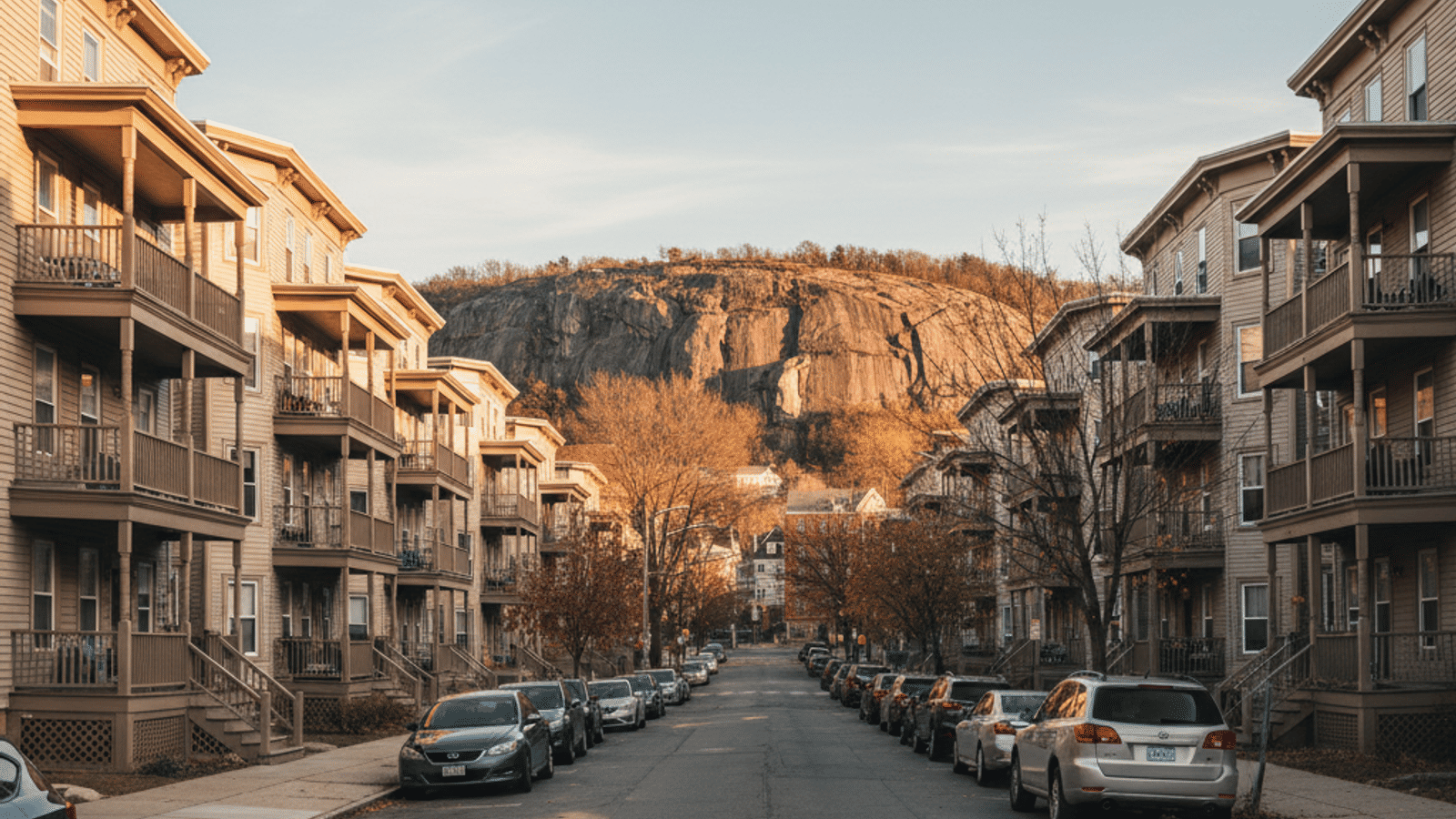
When you drive through the streets of Rimmon Heights, the architecture tells you exactly what this neighborhood was built for. The landscape is dominated by the iconic “Triple Decker”—three-story apartment buildings with rows of porches stacked one on top of the other. You will see large duplexes and multi-family buildings on almost every block, with far fewer single-family detached homes compared to the North End or the suburbs.
As of early 2026, this market is incredibly competitive, especially for investors. Because the housing stock is so heavy on multi-units, it is a prime target for “house hackers”—buyers who live in one unit and rent out the others to cover the mortgage. Inventory for turnkey properties remains tight, so if you see a well-maintained three-family hit the market, expect it to move quickly.
For those crunching the numbers, affordability is still a draw here relative to other parts of southern New Hampshire. You are generally looking at a price range between $400,000 and $550,000 for multi-family buildings, though condos or properties needing significant work might dip lower. Keep in mind that property taxes are a real factor in your monthly payment; the 2025 tax rate in Manchester was set at $20.24 per $1,000 of assessed value.
Living in Rimmon Heights: Amenities & Lifestyle
Life here revolves around two main anchors: the massive green space of Rock Rimmon and the commercial hustle of Kelley Street. Rock Rimmon Park is the neighborhood’s crown jewel, spanning roughly 140 acres. It’s not just a patch of grass; it features a 150-foot granite cliff that offers some of the best views of the city skyline. Residents head here for the hiking trails, the DuPont Pool in the summer, and active pickleball and basketball courts.
If Rock Rimmon is the backyard, Kelley Street is the living room. Often called the “Main Street” of the West Side, this strip is lined with local businesses that keep the community running. You can grab your morning coffee and pastry at spots like The Bakeshop on Kelley Street, or hit up one of the local markets.
One of the biggest perks of living in Rimmon Heights is walkability. The dense grid layout means you are rarely more than a few blocks from a corner store, a park, or a bus stop. It is an urban setting, so street noise and activity are part of the daily package, but for many residents, that energy is part of the appeal of living in Manchester NH.
Schools and Education
For households with students, understanding the school feeder pattern is key. Rimmon Heights is part of the Manchester School District (SAU 37). High school students here typically attend Manchester West High School, home of the Blue Knights, which is located right in the heart of the Notre Dame/West Side area.
Younger students usually attend the Middle School at Parkside. Elementary assignments generally fall between Parker-Varney or Gossler Park, though you should always verify the specific zoning for any home you are interested in, as street boundaries can be specific. The area also feels the influence of Saint Anselm College, which sits just over the border in Goffstown, adding a collegiate layer to the broader West Side community.
Commuting from the West Side
For commuters, Rimmon Heights is strategically one of the best spots in the city. You are just minutes away from downtown Manchester via the Notre Dame Bridge (Bridge Street) or the Nazaire Biron Bridge. If you work in the city center, your commute is often less than 10 minutes by car.
If you need to travel south toward Nashua or Boston, the highway access is immediate. The neighborhood sits right next to I-293 (the Everett Turnpike). You can usually get to Nashua in about 20 to 25 minutes depending on traffic. Public transit is also a viable option here, with the Manchester Transit Authority (MTA) operating routes like the #6 and #11 that serve the area regularly. Just be aware that the bridges can become choke points during peak rush hour, though internal travel within the West Side usually remains quick.
Safety and Neighborhood Perception
Safety and vibe are often the first things potential buyers ask about. Rimmon Heights is an urban neighborhood, and perceptions of it can vary depending on who you talk to. Long-time residents often cite the strong bonds between neighbors—people here tend to know each other, and there is a genuine “neighborhood watch” culture born out of close proximity.
From a data perspective, crime rates are generally moderate compared to national urban averages, but it is a city environment. You should expect typical urban challenges, such as noise and higher population density. Residents generally consider the southwest portion of the neighborhood—closer to some of the single-family streets—to be quieter. As with any city living, using standard “street smarts” is recommended, but community initiatives and revitalization efforts continue to improve the area’s walkability and feel.
Pros and Cons of Rimmon Heights
If you are on the fence about whether this neighborhood fits your lifestyle, here is a quick breakdown of how it stacks up.
Pros:
- Affordability: Your dollar often goes further here than on the East Side or in the North End.
- Investment Potential: The prevalence of multi-family homes offers excellent income-generating possibilities.
- Amenities: Kelley Street provides walkable access to food and services, and Rock Rimmon Park offers massive outdoor recreation space.
- Commute: Instant access to I-293 makes getting out of town easy.
Cons:
- Density: It can feel crowded, and the houses are close together.
- Parking: On-street parking can be very tight, especially during winter snow bans.
- Housing Age: Many homes are over 100 years old and may require updates or maintenance.
Frequently Asked Questions
Yes, it is widely considered one of the stronger areas for investors in Manchester. The neighborhood housing stock is dominated by three-family and two-family homes, creating significant opportunities for rental income or owner-occupied “house hacking.”
Residents are part of the Manchester School District. Students generally attend Manchester West High School and Middle School at Parkside, with elementary students typically zoned for Parker-Varney or Gossler Park depending on the specific street.
It is very close, located just across the river on the West Side. Driving to downtown typically takes less than 5 to 10 minutes via the Notre Dame or Nazaire Biron bridges.
The area was historically the center of Manchester’s French-Canadian population who worked in the nearby textile mills. Locals often use “Notre Dame” and Rimmon Heights interchangeably to describe this section of the West Side, reflecting its rich cultural heritage.