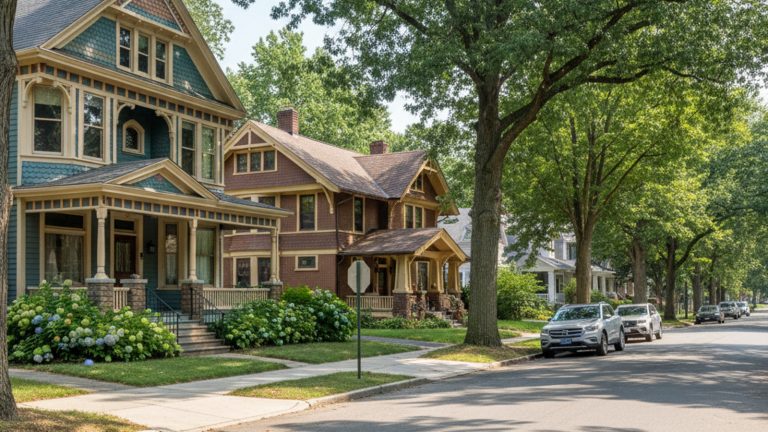


If you are a homeowner in Manchester, opening that property tax bill can sometimes feel like a shock to the system. You might see a number listed as your “Assessed Value” and wonder why it looks so different from what you see homes selling for on Zillow or Redfin.
It is a common point of confusion for both long-time residents and people looking at homes for sale in Manchester. The reality is that the number the city uses to tax you and the number a buyer will write on a check are rarely the same thing.
With the 2026 tax rate set at $20.24 per $1,000, understanding how that valuation is calculated is critical for your wallet. Whether you are trying to figure out if your tax bill is fair or you are curious about what your home might fetch on the open market, you need to know the difference between assessment and appraisal.
Assessed Value vs. Market Value: What is the Difference?
The biggest mistake homeowners make is assuming their tax assessment is the current price tag of their home. While they are related, they serve two very different masters.
Assessed Value is a number generated by the City of Manchester using mass appraisal methods. The city has to value tens of thousands of properties at once, so they use broad data to come up with these figures. Because the market moves faster than the tax department, these numbers often lag behind reality.
Market Value, on the other hand, is what a buyer is willing to pay right now. This is determined by real estate agents running comps (comparable sales), private appraisers, and the simple supply-and-demand dynamics of the current market.
The Equalization Ratio
Here is the most important number you need to know: 68.4%.
That was the 2024 Equalization Ratio for Manchester. Because property values skyrocketed over the last few years and assessments stayed static, the city acknowledges that assessed values are currently lower than market values.
In plain English, the city assumes your tax assessment is only about 68.4% of what your house is actually worth.
Let’s look at an example: If your tax card says your home is assessed at $300,000, you shouldn’t assume that is your sale price. If you apply the equalization ratio (dividing the assessment by 68.4%), the city is effectively estimating your market value is closer to $438,000.
If you are thinking about selling a home in Manchester NH, do not price it based on the tax card alone, or you might leave significant money on the table.
How to Look Up Your Property Assessment in Manchester
If you haven’t looked at your official data in a while, it is smart to check it for errors. Manchester doesn’t host this data directly on the city website; they use a third-party host called Vision Government Solutions (VGSI).
To find your data, you can head to the Vision Government Solutions online database. It is the digital filing cabinet for the Assessor’s Office. Once there, you can search by address or owner name.
When you pull up your “Property Card,” you will see two main figures:
- Land Value: The value of the dirt your house sits on.
- Improvement Value: The value of the building, garage, and other structures.
Pro Tip: Click on the “Sketch” tab. This shows the outline of your home. I often see errors here—like a 2-bedroom cape listed as having 4 bedrooms, or a finished basement that doesn’t actually exist. If the sketch is wrong, your value is wrong.
For a visual representation of your property lines, you can also check the City of Manchester GIS Map. This is great for verifying lot size, though it’s not a legal survey.
Decoding the 2026 Manchester NH Property Tax Rate
So, where does that $20.24 tax rate actually go? It’s not just a random fee; it funds specific services that keep the city running.
For 2025, the total rate is $20.24 per $1,000 of valuation. Here is how that breaks down:
- Municipal (City Services): $10.04
- Local Education (Schools): $7.33
- State Education: $1.51
- County: $1.36
Sample Calculation
If you own a home assessed at $400,000, here is what your annual bill looks like roughly: $400 (thousands) x $20.24 = $8,096 per year.
This bill is usually split into two payments, but this total gives you the annual carrying cost of the property.
Upcoming: The 2026 City-Wide Revaluation
If you feel your assessment is out of sync, keep in mind that a major reset is coming. The city has hired Vision Government Solutions to conduct a full revaluation for 2026.
Starting in March 2026, you may see data collectors in your neighborhood. Their job is to inspect properties to ensure the city’s data matches the physical condition of the homes. The goal of this revaluation is to bring assessments back closer to 100% of market value, eliminating the need for that confusing equalization ratio we talked about earlier.
Safety Note: Real data collectors will always carry ID and will be registered with the Manchester Police Department. Don’t hesitate to ask for identification.
Determining Market Value for Selling
If you are looking to move, you need a precise number, not a mass-market estimate.
While the tax assessment gives you a baseline, a Comparative Market Analysis (CMA) is the standard for setting a listing price. This is where a local expert looks at homes that have actually sold recently in your specific area—whether that’s a historic Victorian in the North End or a multi-family in Rimmon Heights.
Why not just use online estimates? Automated valuation models (like those found on Zillow or Redfin) are algorithms. They are great for ballparking, but they can’t see that you just renovated the kitchen or that your “finished attic” has a slanted ceiling that makes it unusable. For unique Manchester properties, these online tools can be off by tens of thousands of dollars.
If you need a value for legal reasons (like a divorce or refinancing), you will need to pay for a private appraisal, which typically costs between $400 and $600.
How to Appeal Your Assessment (Abatement Process)
What if the city thinks your house is worth way more than it really is? You have the right to challenge it through the Abatement Process.
If you believe your assessment is disproportionate or based on factual errors (like that extra bathroom the city thinks you have), you can file for an abatement.
- The Deadline: You generally must file by March 1st following your final tax bill.
- The Burden of Proof: It is not enough to just say “my taxes are too high.” You have to prove the value is wrong. This usually requires providing a recent appraisal or a list of comparable sales that show the city’s number is high.
Important: Even if you file an abatement, you must pay your tax bill by the due date. If you win your appeal, the city will refund the difference with interest. If you don’t pay, you will be hit with interest penalties regardless of the appeal outcome.
Frequently Asked Questions
Does property valuation in Manchester NH include land?
Yes. Your total assessed value is the combination of the Land Value and the Improvement Value (the structure itself). When you look at your property card on the Vision database, you will see these listed separately, but the tax rate is applied to the sum of both.
When are Manchester NH property taxes due?
Manchester property taxes are billed semi-annually. Generally, the bills are due on July 1st and December 1st. The first bill is usually an estimate based on the prior year’s rate, while the second bill adjusts for the new tax rate set by the state and city.
How often does Manchester NH reassess property values?
The city typically undergoes a full revaluation every five years to keep values consistent with market trends. The next major city-wide revaluation is scheduled to be finalized in 2026, with data collection starting in the spring of 2026.
What is the Vision Government Solutions database?
Vision Government Solutions (VGSI) is the technology company that hosts the digital assessment data for Manchester. It is the official portal where homeowners can view their property cards, check sketches, and see the assessed value history of their home.