
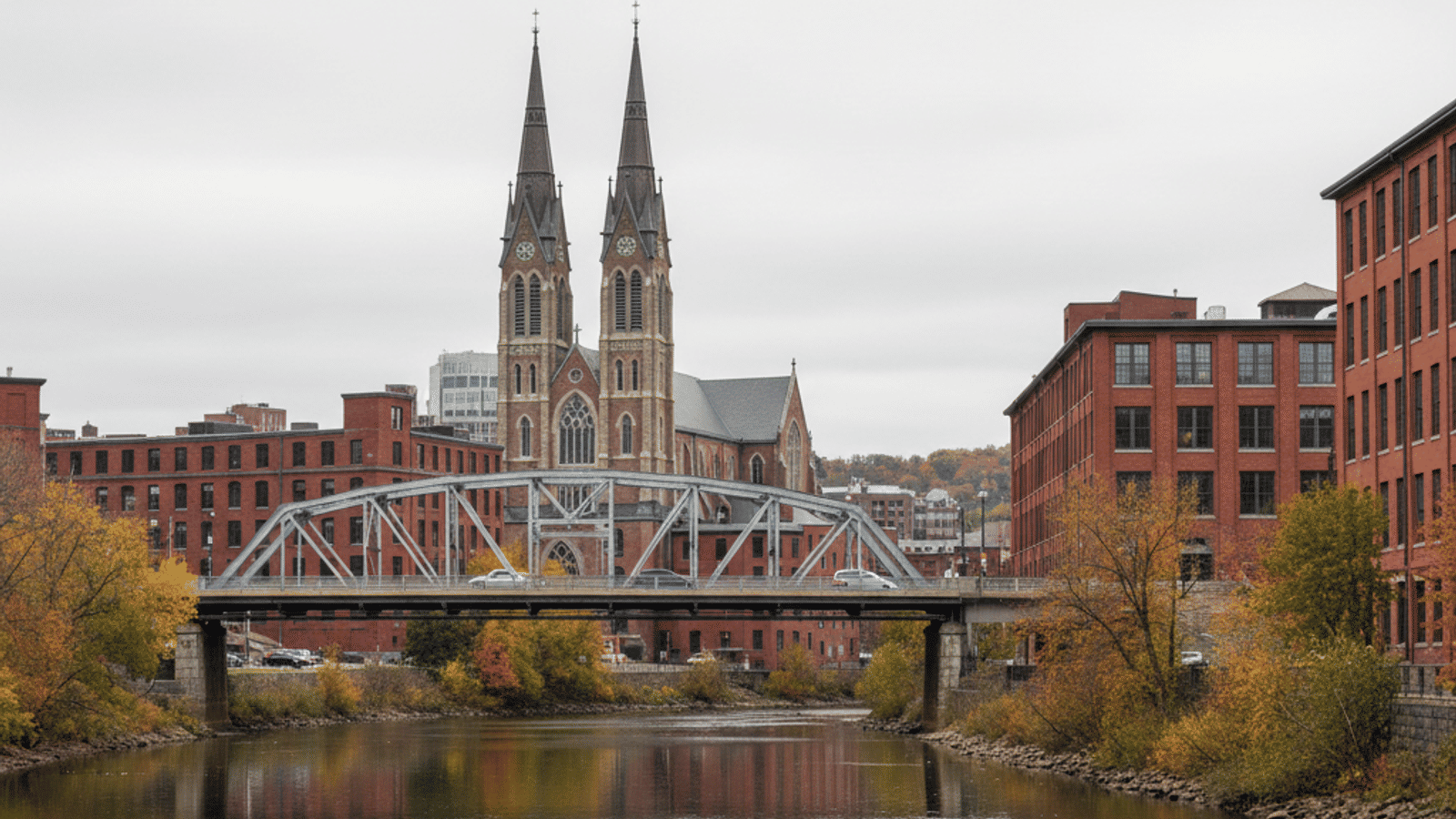
When you drive across the Merrimack River and look up at the towering spires of Ste. Marie Parish, you are looking right at the heart of the Notre Dame neighborhood. For many locals, this area is simply the “West Side,” but real estate insiders and long-time residents know it as a distinct pocket with its own rhythm, history, and architectural flavor.
Historically nicknamed “La Petite Canada” (Little Canada) because of its deep French-Canadian roots, Notre Dame has evolved into one of Manchester’s most diverse and bustling residential sections. It sits just west of the river, anchored heavily by Catholic Medical Center (CMC) and the historic church that defines the skyline. If you are thinking about living in Manchester NH, specifically on the West Side, this neighborhood offers a unique “city within a city” feel that is distinct from the quieter, sprawling suburbs further out.
One of the biggest draws here is the sheer convenience. You aren’t tucked away in a remote cul-de-sac; you are minutes from everywhere. With the Bridge Street Bridge (often locally called the Notre Dame Bridge) connecting you directly to the downtown arena and Elm Street, you get urban accessibility without the downtown price tag.
Notre Dame Real Estate: Market Trends in 2026
If you are keeping an eye on Manchester NH real estate, you likely know that inventory has been tight. As of early 2026, the Notre Dame neighborhood remains a highly active market, particularly for two distinct groups: investors and first-time homebuyers looking for value.
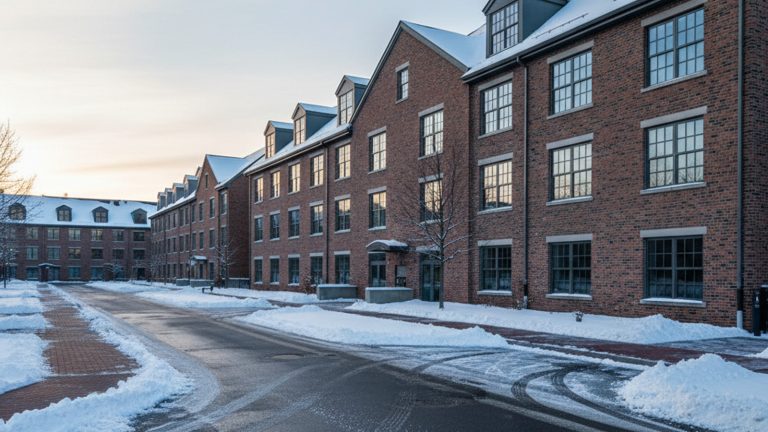
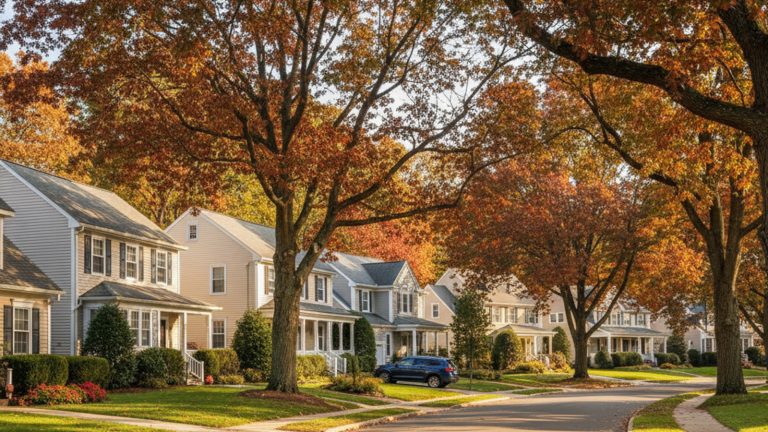
The housing stock here is iconic. You won’t find many sprawling ranch communities. Instead, the streets are lined with turn-of-the-century multi-family homes—classic triple-deckers that define New England urban architecture—mixed with converted condos and modest single-family Capes or Colonials.
Investment and Pricing Landscape
For investors, this area is often the first stop. The density of 2-4 unit buildings makes it a hotspot for those looking to acquire rental property. Because of the proximity to CMC, there is a built-in demand for rentals from traveling nurses, hospital staff, and professionals who want a short commute.
As we look at the numbers for early 2026, prices have nudged upward due to this steady demand.
- Single-Family Homes: You can generally expect to see pricing in the low-to-mid $400,000s. These homes tend to be on smaller city lots but offer a solid entry point into homeownership.
- Multi-Family Properties: These are the heavy hitters of the neighborhood. Depending on the condition and rental history, 3-unit buildings often trade between $500,000 and $700,000.
- Rentals: If you are looking to rent rather than buy, updated two-bedroom units in the area are hovering around $1,800 to $2,200 per month.
While the North End often commands the highest premiums, Notre Dame offers a middle ground—more affordable than the north, but appreciating faster than some outlying areas due to its strategic location.
Lifestyle & Vibe: Urban Living with Historic Charm
Living in Notre Dame is not a quiet countryside experience; it is vibrant, dense, and energetic. The vibe here is heavily influenced by the historic red brick mills and the layout of the streets, which were designed for walking long before cars dominated the road.
There is a strong sense of community here. You will find a mix of residents who have lived in the same triple-decker for generations living right next door to young professionals who just bought their first condo. It creates a dynamic street life where neighbors actually see each other on the sidewalks.
Because the neighborhood sits so close to a major hospital and busy thoroughfares like McGregor Street, you should expect the sounds of the city. Ambulance sirens and traffic are part of the background noise here. However, for those who love the energy of an urban environment, this trade-off is worth it for the ability to walk to the corner store, the bank, or a local diner.
Local Amenities: Parks, Shopping, and Healthcare
When you look at Manchester NH neighborhoods, the best ones usually have their own self-contained amenities, and Notre Dame is no exception. You don’t always have to cross the bridge to get what you need.
Healthcare as an Anchor It is impossible to talk about this neighborhood without mentioning Catholic Medical Center (CMC). It is more than just a hospital; it is a major economic engine and a landmark for the area. For residents, having top-tier emergency services and healthcare providers literally around the corner is a significant peace of mind.
Parks and Recreation Despite the density, there is green space if you know where to look. Lafayette Park, located right on Notre Dame Avenue, serves as a historic square and a gathering spot. Nearby Simpson Park offers more room to stretch out, and the areas near the Notre Dame Bridge provide scenic views of the Merrimack River—perfect for a morning jog.
Local Flavor and History The commercial hubs along Second Street and Kelley Street are packed with local character. You’ll find pizza shops, diners, and essential services that have been there for years. History buffs also appreciate that this neighborhood is the home of St. Mary’s Bank. It isn’t just a bank; it’s the site of the first credit union in the nation, housing the Musee de la Caisse Populaire, which honors the area’s cooperative financial history.
Schools and Education in the Notre Dame Area
For households considering the move, understanding the school landscape is critical. The neighborhood is served by the Manchester School District, and the local schools are deeply integrated into the fabric of the West Side.
- High School: Manchester West High School is a massive brick landmark located directly on Notre Dame Avenue. It is the pride of the West Side and central to local identity.
- Middle & Elementary: Most students in this zone attend Parkside Middle School. For elementary grades, depending on your specific street address, students generally attend Gossler Park Elementary or Parker-Varney.
In addition to the public system, the area has a long history of parochial education. While the landscape of private schools has shifted over the years, options like St. Benedict Academy nearby continue to serve families looking for private alternatives.
Commuting & Transportation: A Strategic Location
If you commute, Notre Dame is arguably one of the most strategically located neighborhoods in the city. You have immediate access to I-293 via Exits 5 and 6. This is a game-changer for anyone working in Concord (about 20 minutes north) or Nashua (about 20-25 minutes south). You can hop on the highway without fighting through downtown traffic first.
For local transit, the Manchester Transit Authority (MTA) runs regular bus routes through the neighborhood, connecting you to the rest of the city.
The walkability factor here is also high. If you work downtown, you can walk or bike across the Bridge Street Bridge or the Queen City Bridge in roughly 15 to 20 minutes. While bike lanes are improving, keep in mind this is still an urban traffic area, so staying alert is key.
Notre Dame vs. Other Manchester Neighborhoods
Choosing a neighborhood often comes down to comparisons. Here is how Notre Dame stacks up against other popular parts of the city:
- Vs. The North End: The North End is famous for its large Victorian homes and quiet, tree-lined streets, but it comes with a much higher price tag. Notre Dame is denser and more affordable, making it a better entry point for budget-conscious buyers who still want character.
- Vs. Downtown: If you love the idea of loft living but want a bit more “neighborhood” feel (and perhaps a yard, however small), Notre Dame is a great compromise. You are close enough to enjoy the downtown nightlife but can retreat to a slightly quieter residential street.
- Vs. Southside: The Southside and Bakersville areas have similar density, but Notre Dame has a distinct cultural history and superior highway access for northbound commuters.
Frequently Asked Questions
Like many urban neighborhoods, safety can vary block by block. Notre Dame is a dense, busy area with a strong community presence and active street life, which helps maintain a sense of vigilance. Residents generally feel comfortable, especially on main thoroughfares, but it is always smart to visit the neighborhood at different times of day to gauge your own comfort level.
The area is defined by “triple-deckers”—three-story multi-family buildings that are iconic to New England mill cities. You will also find a good mix of smaller single-family Capes, Colonials, and converted condominium units, making it a diverse market for different housing needs.
It is incredibly close—essentially just across the river. Depending on where you start in the neighborhood, you can drive to Elm Street in about 5 minutes, or walk there in 15 to 20 minutes via the Bridge Street Bridge.
The name stems from the area’s rich French-Canadian Catholic history, specifically referencing landmarks like the Notre Dame de Lourdes Hospital (which merged into CMC) and the overarching influence of the parish. While often grouped under the “West Side,” the name pays homage to the specific cultural and religious heritage of the residents who built the community.