
If you are looking at a map of New England trying to find a balance between city conveniences and a price tag that doesn’t make your eyes water, you have probably landed on Manchester. Known locally as the “Queen City,” it is the economic and cultural hub of the state.
For many buyers, Manchester real estate hits the sweet spot. It sits just about 50 miles north of Boston, offering a significantly lower cost of living while still providing a legitimate urban feel. You aren’t moving to a sleepy town in the middle of nowhere; you’re moving to a city with its own gravity. Plus, you get the full benefit of the “Live Free or Die” spirit, which in financial terms means no state income tax on your wages and no general sales tax when you shop.
Pros and Cons of Living in Manchester, NH
Every city has its trade-offs, and Manchester is no exception. Before we dive into the numbers, it helps to have a high-level view of what day-to-day life is like if you decide to call Manchester home.
The Pros
- Tax Benefits: The lack of sales tax and income tax on wages is a massive draw for residents relocating from Massachusetts or Connecticut.
- Location: You are centrally located. You can be at the beach, in the White Mountains, or in downtown Boston all within about an hour.
- Downtown Life: Elm Street is vibrant, walkable, and packed with more dining options than you might expect for a city of this size.
- Affordability: While prices have risen, housing here is still much more attainable compared to the Greater Boston area.
The Cons
- Property Taxes: Because the state doesn’t tax income or sales, local property taxes are among the highest in the country to fund services.
- Winter Weather: New Hampshire winters are long, cold, and snowy.
- Inventory: The real estate market is competitive. Good homes in desirable neighborhoods often see multiple offers quickly.
Cost of Living in Manchester vs. Boston and Beyond
Let’s talk money, because that is usually the number one driver for people moving to New Hampshire. Generally speaking, if you are coming from Boston, you can expect Manchester to be roughly 30% to 45% cheaper overall.
The biggest factor here is the “New Hampshire Advantage.” You will not see a line item on your pay stub for state income tax. That’s an immediate raise for anyone moving from a state with a 5% or 6% tax rate. Furthermore, there is no sales tax on goods. When you buy a couch, a car, or a coffee, the price on the tag is the price you pay. Note that NH is also in the process of phasing out the Interest & Dividends tax, which is scheduled to be gone entirely by 2025.
However, you have to pay for local services somehow, and that happens through property taxes. When you are calculating your monthly mortgage payment, you need to pay close attention to the tax line. It is not uncommon for the monthly tax bill to feel steep compared to other states, but you have to weigh that against the savings on income and sales tax.
As for day-to-day expenses, utilities and groceries tend to be near the national average or slightly higher, which is typical for New England where heating costs and shipping play a role.
Manchester Real Estate: Buying vs. Renting
The housing market here has shifted over the last few years from a hidden gem to a highly sought-after destination. Whether you are looking to buy or rent, you need to move fast.
If you are buying, the median home price in 2025 is hovering in the $425,000 to $465,000 range. You will find a distinct mix of inventory. The North End is famous for its stunning Victorian architecture, while the downtown area offers converted mill condos that feature exposed brick and high ceilings. Multi-family homes are also very common here, which is great for buyers looking to “house hack” by living in one unit and renting out the others.
For renters, prices have climbed, but they still look like a bargain compared to the prices south of the border. You can expect to see average rents around $1,800 to $2,000 per month. The “Millyard” area has become a hub for trendy lofts, attracting young professionals who want to walk to work at the nearby tech companies.
Best Neighborhoods in Manchester, NH
Manchester is divided geographically by the Merrimack River. Locals generally refer to areas as the “East Side” or “West Side,” but there are distinct pockets within those areas that have different vibes.
North End
This is historically one of the most desirable parts of the city. It is known for tree-lined streets, historic mansions, and larger lots. It feels very established and residential, typically commanding a higher price point than other zip codes.
South End
The South End offers a mix of single-family ranches, Capes, and multi-family properties. It is generally more accessible price-wise than the North End and has a strong sense of community. It’s a very practical area for commuters needing quick access to the highway.
Rimmon Heights / West Side
Located across the Merrimack River, the West Side (including Rimmon Heights) is often more affordable. The housing stock is incredibly diverse, ranging from triple-deckers to single-family homes. It has its own commercial districts and easy access to amenities without always needing to cross the bridge downtown.
Downtown / Millyard
If you want to be in the center of the action, this is it. This area is ideal for those who prioritize walkability to restaurants, bars, and offices. Living here means you are swapping a backyard for proximity to the riverfront and nightlife.
Job Market and Major Employers
A common misconception is that everyone in Manchester commutes to Boston. While many do, Manchester is a robust job hub in its own right. The city has reinvented itself from a textile manufacturing giant to a center for healthcare, education, and technology.
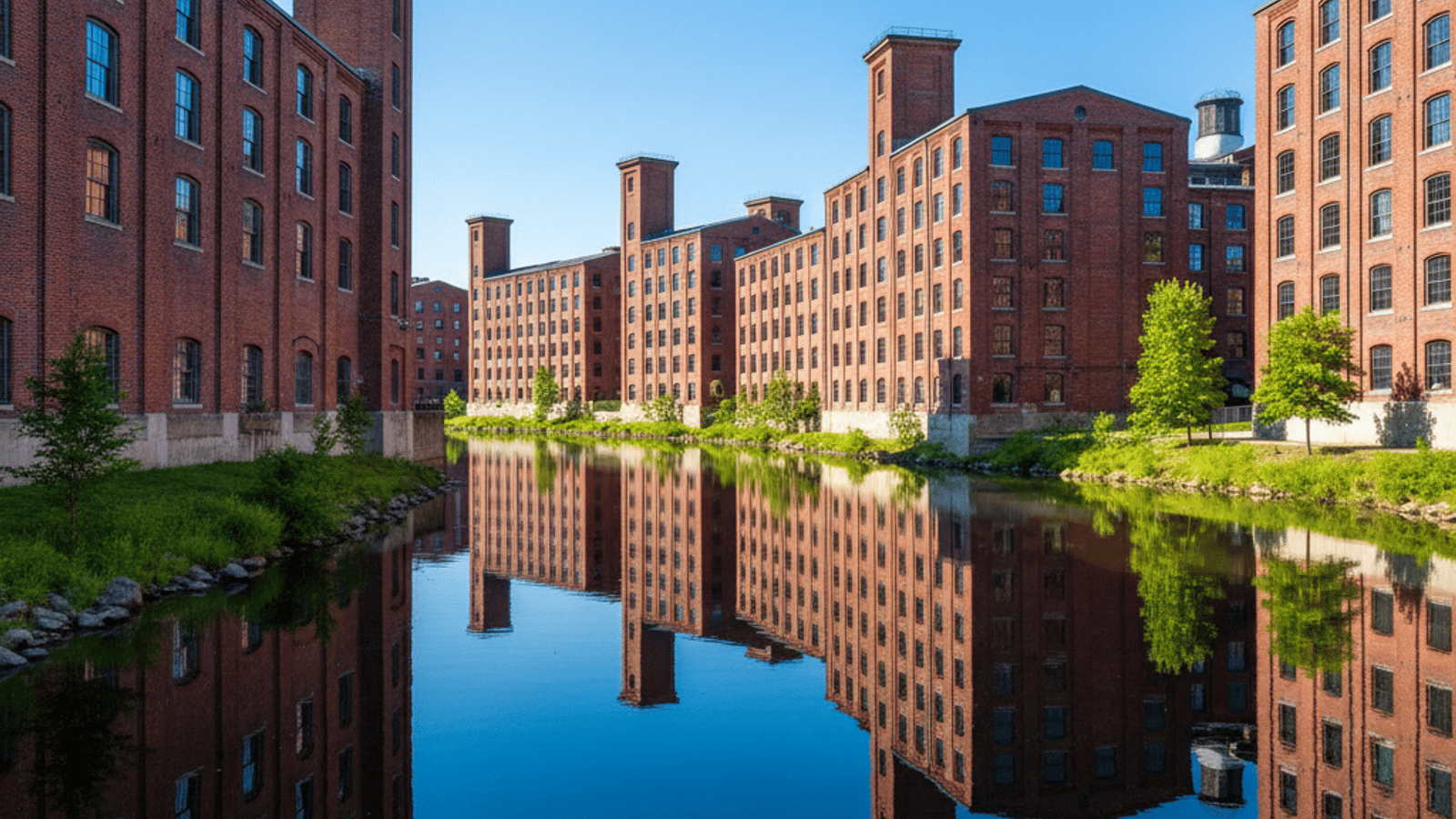
The Millyard—the historic row of brick buildings along the river—is now the heartbeat of the local tech scene. It’s where companies like Oracle (stemming from the Dyn acquisition) and huge educational institutions like Southern New Hampshire University (SNHU) have a major footprint.
Beyond tech, healthcare is a massive employer. Elliot Hospital and Catholic Medical Center (CMC) are two of the largest employers in the region. If you are in the medical field, there are plenty of opportunities right in town. Of course, if you work in finance or biotech and want a Boston salary, the commute is manageable, making moving to New Hampshire a viable option for high earners.
Transportation and Commuting
Let’s be realistic: Manchester is a car-dependent city. While there is a bus system, most residents own a car for daily errands and commuting.
If you are commuting to Boston, you are likely taking I-93. Without traffic, it is a straight shot that takes about an hour. However, during rush hour, that drive can easily stretch to 1.5 or 2 hours. Many commuters opt for the Boston Express bus, which is a stress-free alternative that takes about 90 minutes.
One of the city’s best-kept secrets is the Manchester-Boston Regional Airport (MHT). It is right in the city, incredibly easy to navigate, and far less stressful than Logan. You can breeze through security and be at your gate in minutes, which is a huge quality-of-life perk for frequent travelers.
Lifestyle: Arts, Culture, and Dining
You don’t need to leave the city to have a good night out. Elm Street is the main artery of downtown and serves as the dining and nightlife capital of the state. You will find everything from classic diners and Irish pubs to high-end steakhouses and fusion cuisine.
Culturally, Manchester punches above its weight. The Currier Museum of Art features world-class European and American pieces and even owns a nearby Frank Lloyd Wright home, the Zimmerman House, which you can tour.
For live entertainment, the historic Palace Theatre hosts Broadway-style shows and concerts. If you are looking for bigger events, the SNHU Arena draws major national touring acts, from concerts to monster truck rallies.
Outdoor Recreation and Weather
Living here means embracing all four seasons. The weather in Manchester varies wildly throughout the year, so your wardrobe will need to range from swimsuits to heavy down parkas.
Winter
Snow is a reality here. You will need snow tires and a good shovel. However, the access to winter sports is unbeatable. McIntyre Ski Area is actually located inside the city limits. It’s fantastic for learning to ski, getting in a few runs after work, or taking the kids tubing. For serious skiing, the big mountains are just an hour north.
Summer and Fall
When the snow melts, locals head to Lake Massabesic. While you cannot swim in it (it’s the city’s drinking water supply), it is stunning for kayaking, fishing, and hiking along the trails. Baseball fans also flock to the riverfront to catch the New Hampshire Fisher Cats, the Double-A affiliate for the Toronto Blue Jays, at Delta Dental Stadium.
Crime and Safety Considerations
Like any urban center with a population over 115,000, Manchester has areas with higher activity and areas that are very quiet. Research often gives the city a “C” grade range relative to national averages, but context matters.
Most crime in the city is property-related, such as larceny or car break-ins, rather than violent crime. The dense city center tends to have higher incident rates compared to the outer residential neighborhoods like the North End or the outskirts of the South Side. If you are new to the area, it is always smart to drive through neighborhoods at different times of day—both day and night—to gauge your own comfort level before signing a lease or a purchase and sale agreement.
Schools and Higher Education
For families and students, education is a top priority. The Manchester School District is the largest in the state, offering a wide variety of programs and a diverse student body. There are also several private and charter school alternatives within the city and in neighboring towns.
In terms of higher education, the city is a college town in disguise. You have the University of New Hampshire (UNH) Manchester campus in the Millyard, Saint Anselm College just next door, and the massive operations of SNHU nearby.
Is Moving to Manchester, NH Right for You?
Manchester is for the person who wants the benefits of a city—walkable dining, major employers, and culture—without the crushing expense of a major metro like Boston. It is for the buyer who is willing to trade a longer commute and some snow shoveling for a mortgage they can actually afford and a paycheck that isn’t docked by state income tax.
If you are ready to explore the neighborhoods, walk down Elm Street, or check out the cost of living in NH for yourself, now is the time to start looking.
Frequently Asked Questions
Yes, Manchester offers a strong balance of urban amenities and affordability, making it a great choice for professionals and those seeking a lower cost of living. While it has urban challenges like any city, its access to nature, lack of income tax, and vibrant downtown are major positives.
The cost of living is generally higher than the national average due to housing and utility costs, but it is significantly lower than Boston. You save money on taxes (no sales or income tax), but you should budget for higher local property taxes.
Yes. Manchester typically sees more than 50 inches of snow each winter, so residents usually plan for winter gear, snow tires, and routine snow removal.
Housing is the largest expense, with rents averaging $1,800–$2,000 and homes averaging $425,000–$465,000, which is expensive compared to rural areas but affordable compared to nearby Massachusetts. Other costs like groceries and utilities are comparable to the rest of New England.
Manchester is about 53 miles north of Boston. The drive usually takes around an hour in light traffic, but rush hour can stretch it to 90 minutes or more.