
If you are looking at relocating to NH or just moving within the state, you’ve likely stared at a map and realized that Manchester and Hooksett aren’t just neighbors—they are practically interwoven. Yet, crossing the town line feels like entering a different market entirely.
Manchester is the largest city in Northern New England, acting as the vibrant urban heartbeat of the state. Hooksett, sitting just to the north, serves as a strategic crossroads that offers a quieter pace with serious logistical advantages.
The choice usually comes down to a trade-off: Do you want the density, walkability, and energy of the city, or do you prioritize suburban space and strategic highway access? Both locations offer excellent access to Boston via I-93 and the mountains to the north, but your day-to-day life will look quite different depending on which side of the border you choose.
Cost of Living and Tax Comparison
When clients start crunching the numbers for living in New Hampshire, the conversation always turns to property taxes. Because New Hampshire has no income tax or sales tax on goods, property taxes carry the weight of municipal funding. This is where the Manchester vs. Hooksett debate gets interesting financially.
Historically, Hooksett has maintained a lower tax rate than Manchester. For the 2026 tax year, estimates generally place Manchester around the $20.24 per $1,000 of assessed value mark, while Hooksett sits lower, estimated near $16.96 per $1,000.
However, a lower tax rate doesn’t always mean a cheaper monthly payment. Here is how the math usually plays out:
- Manchester: You can often find lower entry-level home prices ($385,000–$425,000 range), but the higher tax rate pushes your monthly escrow payment up.
- Hooksett: Home prices trend higher ($435,000–$500,000+), but the lower tax rate helps offset that higher mortgage balance.
Essentially, it can be a wash. You might pay more for the house in Hooksett to save on taxes, or pay less for the house in Manchester and pay more to the city. Outside of housing, affordability in NH is fairly consistent between the two; utilities, groceries, and services are similar since both towns share the same regional infrastructure.
Real Estate Market: What Can You Buy?
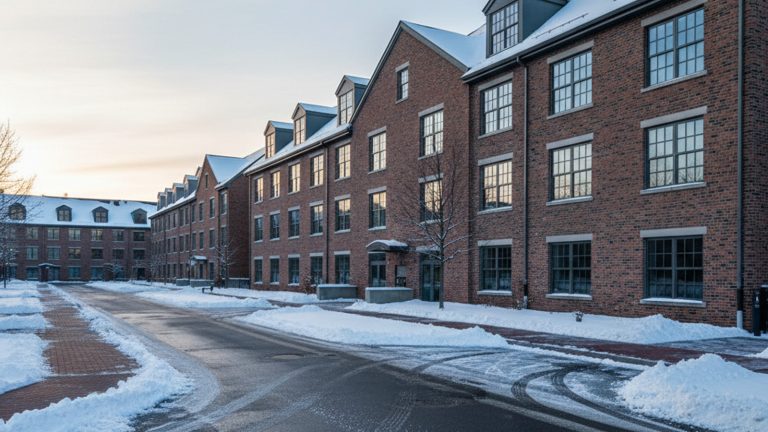
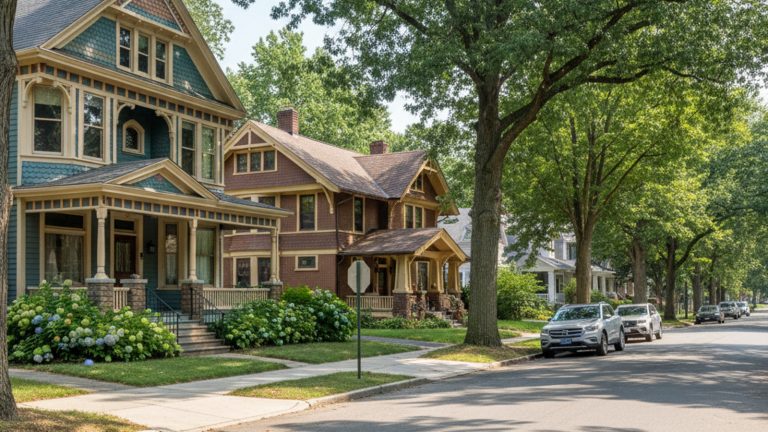
The housing stock is the most visible difference between these two markets. Manchester is incredibly diverse. If you are browsing homes for sale in Manchester NH, you will see everything from converted mill lofts downtown and Victorian multi-families to dense single-family neighborhoods in the North End or West Side. It is a market that appeals heavily to investors and those who love historic character.
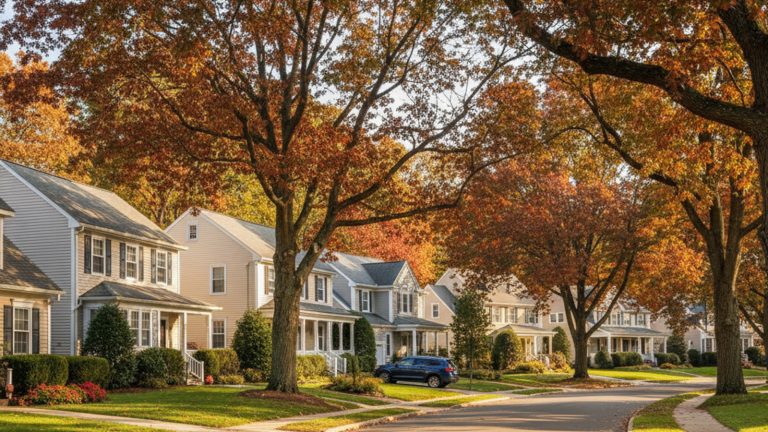
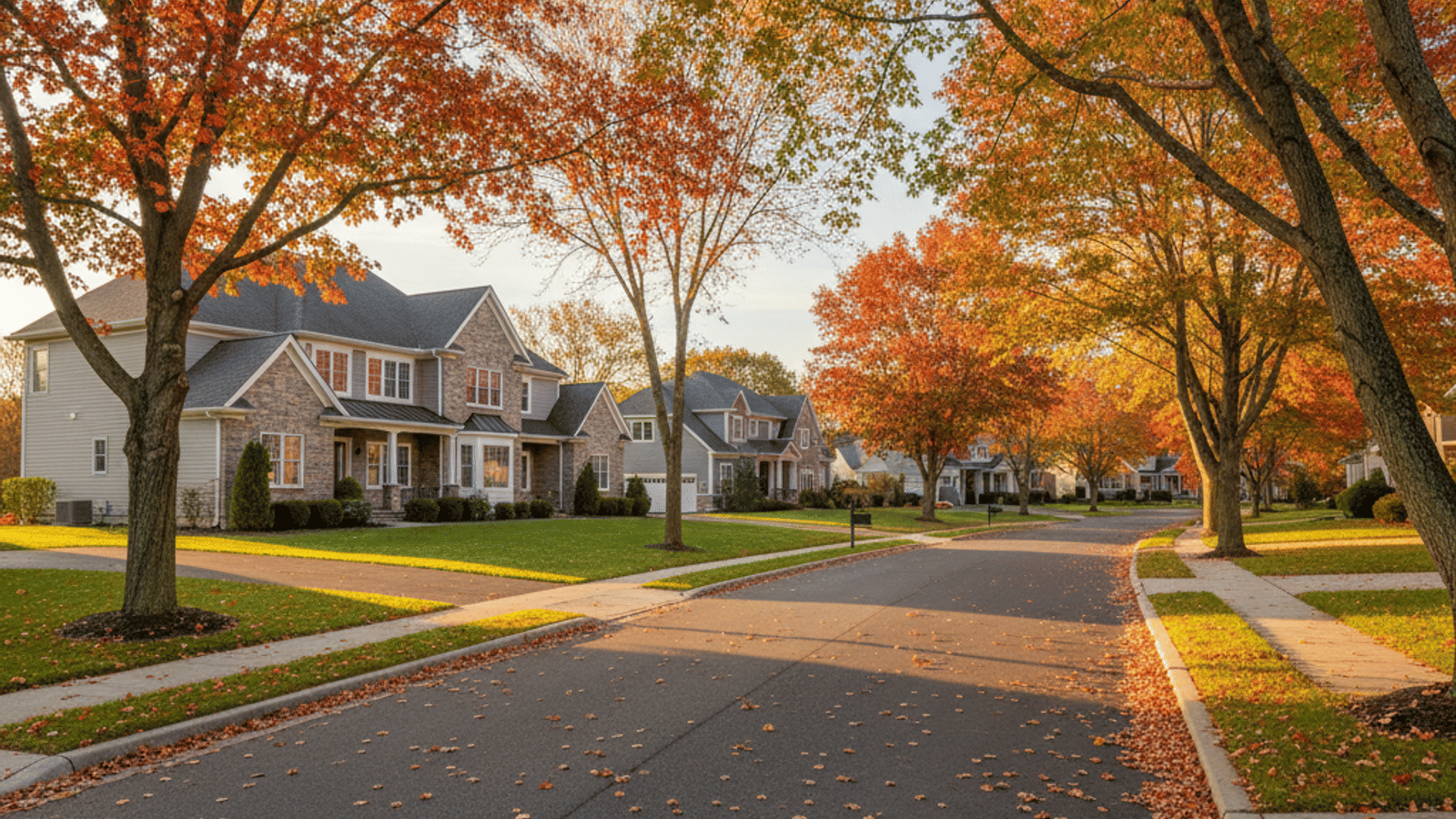
Hooksett, by comparison, is far less dense. The inventory here is predominantly single-family homes located in subdivisions. If you are looking for Hooksett NH homes for sale, you are more likely to find half-acre lots, two-car garages, and houses built from the 1980s through today.
The rental market is another sharp contrast. Manchester has a massive supply of apartments, from luxury high-rises to three-decker flats. Hooksett rentals are much harder to find; they are usually limited to single-family houses for rent or a few luxury complexes near Southern New Hampshire University (SNHU).
Education and School Choice
For many buyers, the school system structure is the deciding factor. Manchester operates a traditional, large-city school district. It is self-contained, meaning students living in the city attend Manchester public schools for elementary, middle, and high school (Central, Memorial, West, or the School of Technology).
Hooksett operates on a very different model that draws a lot of attention from buyers looking for specific educational pathways. The Hooksett School District runs its own local K-8 schools (Memorial and Cawley Middle School), but the town does not have a public high school.
Instead, Hooksett has tuition agreements—often referred to as Memorandums of Understanding (MOUs)—that allow Hooksett students to attend high schools in neighboring towns. This typically includes:
- Pinkerton Academy in Derry (a semi-private school that serves as the public high school for several towns).
- Londonderry High School.
- Manchester High Schools.
This “choice” model is a massive value proposition for Hooksett. It allows residents to send their children to institutions like Pinkerton Academy while paying public property taxes rather than private tuition. When looking at Pinkerton Academy towns, Hooksett is often top of the list for this flexibility.
Commuting and Location
Hooksett acts as a “commuter funnel.” It sits directly between Manchester and the state capital, Concord. If your household has one person working in Concord (about 12 miles north) and another working in Manchester or Nashua, Hooksett is the perfect geographic compromise. It has incredible highway access with Exits 9, 10, and 11 off I-93, plus Route 3/28 running right through town.
Manchester, on the other hand, is the job hub. If you work in the Millyard, downtown, or at the hospitals, living in Manchester could mean a five-minute drive or even a walk to work.
If you are commuting to Boston, Manchester is technically closer (roughly 53 miles), taking about 50 to 55 minutes without traffic. Hooksett adds about 10 to 15 minutes to that drive. Public transit is also more viable in the city; Manchester has the MTA bus service, whereas Hooksett has very limited shuttle options.
Lifestyle: Downtown Vibes vs. Retail Convenience
The lifestyle difference here is “Friday Night vs. Saturday Morning.”
Manchester is where you go for Friday night. It has the Palace Theatre, the SNHU Arena for concerts, and the highest concentration of restaurants and bars in the state along Elm Street. It offers a true “downtown” experience where you can park once and walk to dinner, a show, or a museum in the historic millyard.
Hooksett is where you go for Saturday morning errands. It is home to a massive retail corridor along Route 3A, featuring big-box stores like Target, Bass Pro Shops, and large cinema complexes. It offers convenience in spades, but it isn’t a walkable town center. However, Hooksett offers great access to nature, including Pinnacle Park for hiking and simpler access to boating on the Merrimack River.
While Manchester dominates the independent dining scene, Hooksett has a few local gems tucked between the chains, though you will mostly find yourself driving into the city for a high-end night out.
Which Town Fits Your Lifestyle?
Choosing between these two really comes down to what your daily life looks like.
You should probably choose Manchester if:
- You value walkability and want immediate access to nightlife and culture.
- You are looking for an investment property, like a multi-family home.
- You want the shortest possible commute to Boston or work directly in the city center.
You should probably choose Hooksett if:
- You prefer a quiet subdivision setting with larger lot sizes (0.5+ acres).
- Access to the high school tuition program (specifically Pinkerton Academy) is a priority.
- You want a lower tax rate and don’t mind a slightly higher purchase price.
If you are still on the fence, the best move is to contact a real estate agent who can drive you through the North End of Manchester and then immediately take you to a neighborhood in South Hooksett. Seeing the transition firsthand usually makes the decision clear.
Frequently Asked Questions
It depends on how you measure cost. Hooksett typically has a lower property tax rate, but home purchase prices are generally higher than in Manchester. Conversely, Manchester homes often cost less upfront but come with a higher tax rate, often equalizing the monthly mortgage payments.
Hooksett does not have its own public high school. Instead, the town has tuition agreements that allow students to attend nearby schools, most notably Pinkerton Academy in Derry, as well as Londonderry High School and Manchester Central or West.
They are directly adjacent. The center of Hooksett is only about 5 to 7 miles from downtown Manchester. The drive between the two town centers takes roughly 10 to 15 minutes via Route 3 or I-93.
Property tax rates fluctuate annually, but recent estimates place Manchester around $20.24 per $1,000 of assessed value and Hooksett lower at approximately $16.96 per $1,000. It is important to check the current year’s certified rate before buying.