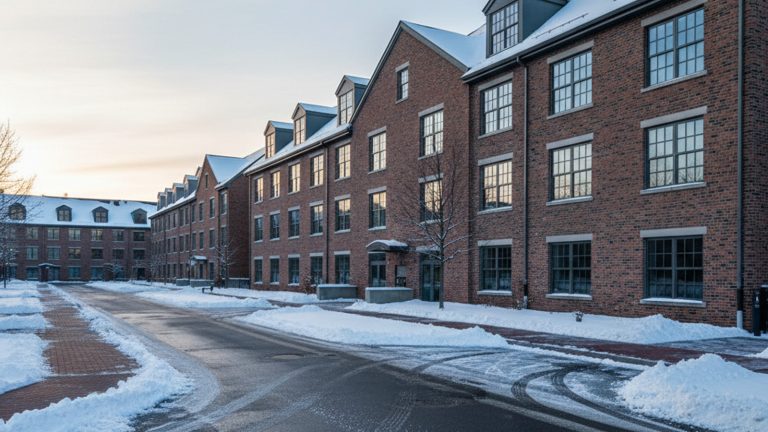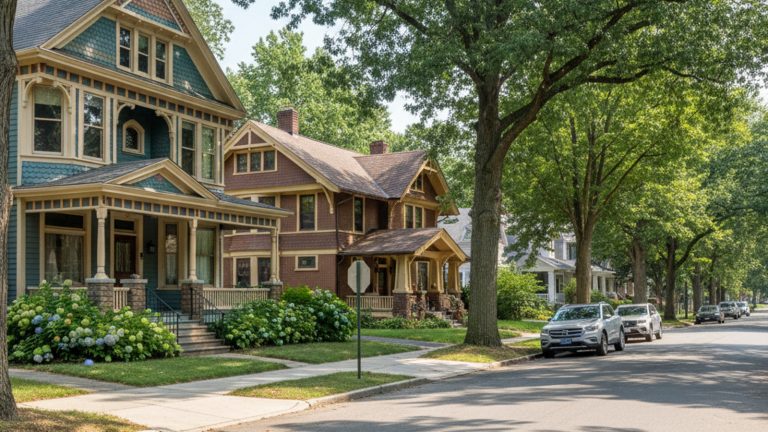

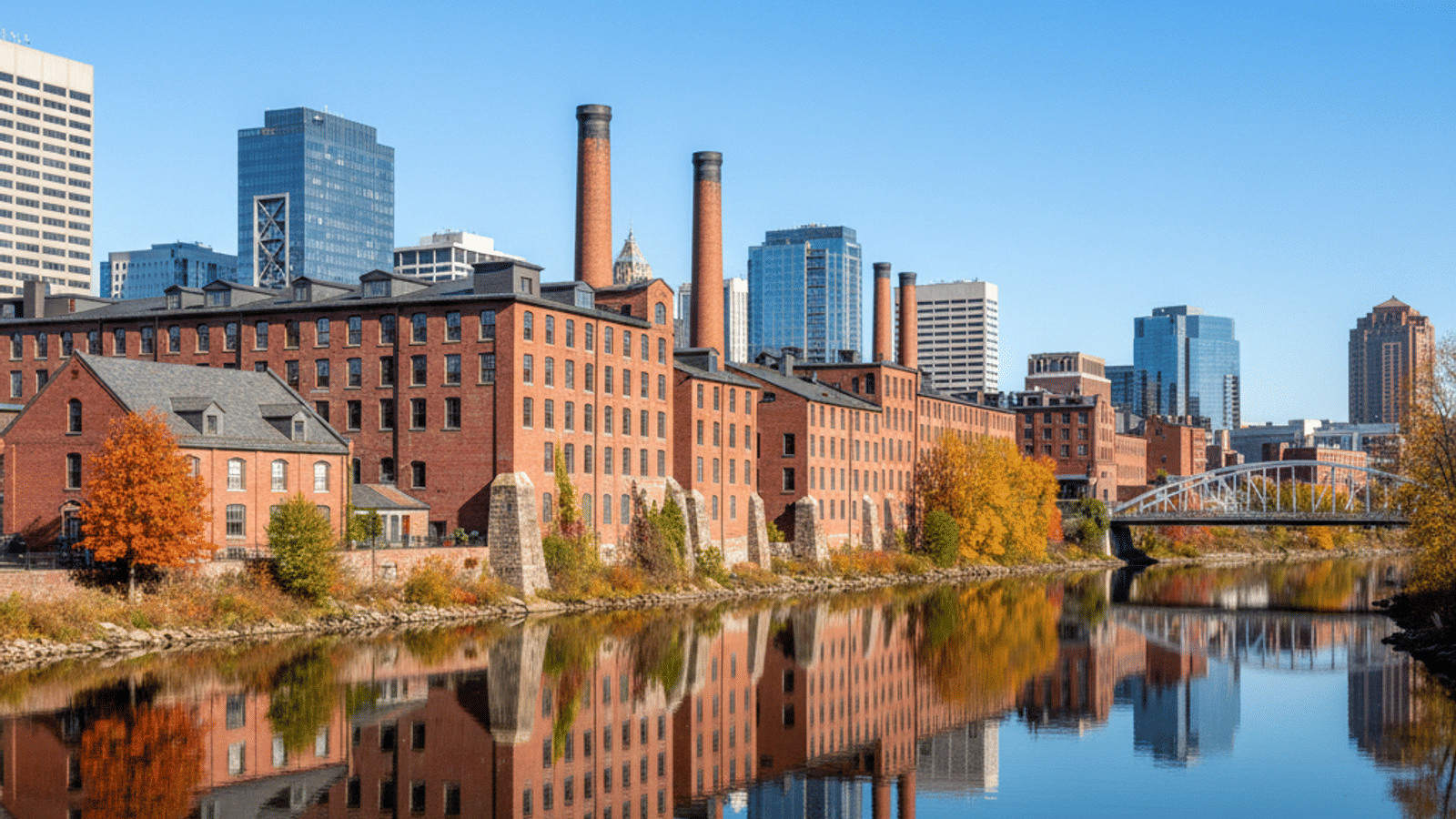
If you have ever stood on the banks of the Merrimack River and looked up at that endless wall of red brick, you know exactly why Manchester is called the “Queen City.” It is a place that feels built on purpose, with a sense of scale that seems almost too big for New England. But if you are thinking about living in Manchester NH, you quickly realize that those bricks aren’t just old factories—they are the story of how a small farming settlement became an industrial titan and then reinvented itself for the 21st century.
It wasn’t always the bustling hub we know today. Long before the tech startups and converted lofts, this area was known as “Derryfield,” a scrappy collection of farms. It took a bold vision to change the name—and the destiny—of the town to match the industrial power of Manchester, England.
For decades, the Amoskeag Manufacturing Company didn’t just run the town; in many ways, it was the town. At its height, it was the largest textile plant on the planet. Today, that history of resilience is visible everywhere you look. The smoke stacks are cold, but the innovation is back, turning the historic Millyard into a modern hub of bio-tech and education. It’s a city that has mastered the art of the comeback.
Early Settlement: The Era of Derryfield
Before the first brick was laid, the land along the Amoskeag Falls was a fishing ground for the Penacook people. The word “Amoskeag” roughly translates to “place of much fish,” a nod to the massive seasonal runs of shad and salmon that defined life on the river long before industry took over.
By the time the area was incorporated in 1751, it was given the name Derryfield. For the first few generations, it wasn’t much more than a quiet farming and logging community. It was the kind of place you passed through, not necessarily where you expected to find the center of the world’s textile trade.
The shift began with a man named Samuel Blodget. While others looked at the Amoskeag Falls and saw a dangerous obstacle for logging barges, Blodget saw potential. He envisioned a canal system that would unlock the river’s power. He was so convinced of the area’s potential that he famously predicted it would become the “Manchester of America,” modeling his ambition after the great industrial city in England.
His vision came to fruition in 1810. The town officially changed its name to Manchester, signaling to the world that it was ready to trade fish and timber for water wheels and industry.
The Engine of the City: Amoskeag Manufacturing Company
If you want to understand the heartbeat of this city, you have to look at the Amoskeag Manufacturing Company. This wasn’t just a business that set up shop here; they built a “Company Town” from the ground up. They laid out the grid for the streets, designed the parks, and built the housing for their workers. The city plan you navigate today is largely the one Amoskeag engineers drafted on paper over a century ago.
The scale of what they achieved is almost hard to wrap your head around. At its absolute peak, the Amoskeag mills employed roughly 17,000 people. To put that in perspective, the mills were churning out about 50 miles of cloth every single hour.
But they didn’t just stick to textiles. During the Civil War and beyond, the company pivoted to meet national needs, producing muskets for the Union Army and steam locomotives that helped build the American railroad system.
When locals talk about the “Mile of Mills,” they aren’t exaggerating. The complex stretched along the riverfront, a fortress of industry that seemed invincible. Walking past those buildings today gives you a small taste of the sheer volume of activity that once powered the entire region.
A Melting Pot: Immigration and Workforce Demographics
The buildings were made of local clay, but the city was built by people from all over the world. In the very early days, the workforce looked a lot like the famous system in Lowell, Massachusetts—mostly young women recruited from local New England farms. But as production skyrocketed, the demand for labor outpaced the local supply.
By the mid-19th century, a massive wave of Irish immigrants arrived, fleeing famine and seeking opportunity. They were soon joined by French-Canadians, who came south in such large numbers that the West Side of the city became known as “Little Canada.” If you walk through some of our historic neighborhoods today, you can still see the architectural influence of these communities.
The waves of immigration didn’t stop there. By the turn of the century, the factory floors were a mix of Greek, German, Swedish, and Polish workers. It’s said that at one point, over 20 different languages were spoken inside the mill gates. This mixture of cultures created the rich fabric of festivals, churches, and social clubs that still define Manchester’s neighborhoods today.
Hard Times: Strikes, Floods, and the Great Depression
No dynasty lasts forever, and the decline of the Amoskeag monopoly is a somber chapter in the city’s history. The cracks in the foundation started showing after World War I. Southern textile mills began competing aggressively with lower wages and newer equipment, putting pressure on the New England giants.
Things came to a head with the Strike of 1922. It was a brutal nine-month standoff over wage cuts and increased working hours. While the company eventually “won” the strike, the victory was hollow; the workforce was demoralized, and the company had lost its competitive edge.
The final blows came in quick succession. The Great Depression wiped out demand, and then nature took its toll. The Great Flood of 1936 was a catastrophe, destroying bridges and smashing the mill infrastructure along the river.
Already teetering on the edge, the Amoskeag Manufacturing Company couldn’t recover from the physical and economic devastation. They filed for bankruptcy in the mid-1930s, closing the doors on the operation that had defined the city for a century.
The Millyard Renaissance: Manchester’s Modern Identity
When the mills closed, many thought Manchester was finished. But the local spirit of resilience kicked in almost immediately. A group of local businessmen formed Amoskeag Industries, pooling their money to buy the complex. Their goal was simple but crucial: prevent the buildings from being demolished and lease the space to smaller, diverse companies.
That move saved the skyline, but the true modern revival accelerated in the 1980s with the arrival of inventor Dean Kamen. He saw the potential in those sturdy brick shells. His company, DEKA, moved in, bringing a new kind of engineering—medical and technological—back to the riverbanks.
Today, the Millyard is buzzing again. It’s no longer about cotton and wool; it’s about higher education and bio-fabrication. The University of New Hampshire (UNH) Manchester and Southern New Hampshire University (SNHU) have major presences here. The Advanced Regenerative Manufacturing Institute (ARMI) is working on cutting-edge tissue engineering right where looms used to spin.
It is a stunning example of adaptive reuse. The old brick walls and heavy timber beams now frame trendy lofts, tech offices, and restaurants. It has created a robust Manchester NH economy where the past and future sit side by side.
Historic Landmarks You Can Visit Today
If you want to see this history up close, you don’t have to look far. There are plenty of things to do in Manchester NH that let you step back in time.
- Millyard Museum: Located in Mill No. 3, this is the best place to start. It offers a comprehensive look at the rise and fall of the Amoskeag Company.
- Stark Park: This beautiful 30-acre park is the burial place of General John Stark, the Revolutionary War hero who gave New Hampshire its “Live Free or Die” motto. It offers a great view of the river he grew up alongside.
- Zimmerman House: Art and architecture lovers should check this out. It is the only Frank Lloyd Wright house open to the public in New England, operated by the Currier Museum of Art.
- The Palace Theatre: Opened in 1915, this historic vaudeville theatre survived the city’s downturn and is now a crown jewel for performing arts downtown.
- Weston Observatory: Built in 1896, this tower stands at one of the highest points in the city, offering panoramic views that help you appreciate the city’s layout.
Frequently Asked Questions About Manchester’s History
When the town was incorporated in 1751, it was named Derryfield, likely reflecting the heritage of the Scotch-Irish settlers from Londonderry, NH, and Derry, Ireland. It remained a modest farming and logging community until the industrial potential of the river prompted the name change in 1810.
While they were world-famous for their textiles—producing millions of yards of gingham, flannel, and denim—they were also a heavy manufacturing powerhouse. During the 19th century, the company produced hundreds of steam locomotives and thousands of muskets for the U.S. government.
The company officially filed for bankruptcy and closed its doors in 1935, following the economic strain of the Great Depression. The devastating flood of 1936 further damaged the infrastructure, marking the physical end of the textile era before the complex was bought by local investors.
Yes, the Millyard is a public, mixed-use district. You can drive or walk through the streets, visit museums like the Millyard Museum, dine at restaurants in converted mill buildings, or visit the various university campuses located within the historic structures.
General John Stark was a Continental Army general during the American Revolution and a native of the area (Derryfield). He is most famous for leading American troops at the Battle of Bennington and for penning the phrase “Live Free or Die,” which became the state motto.