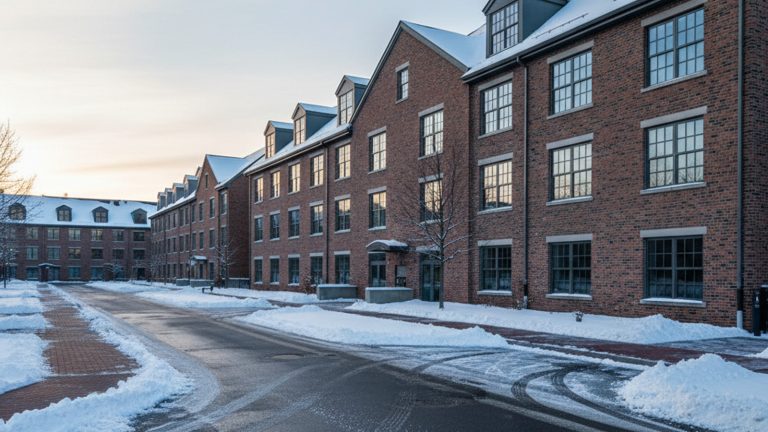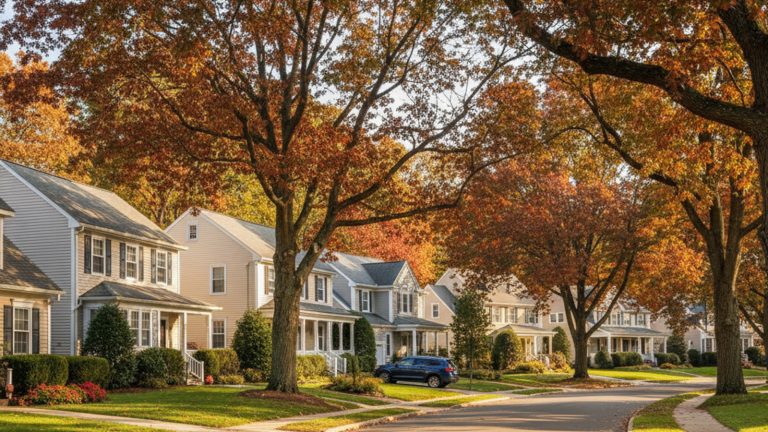

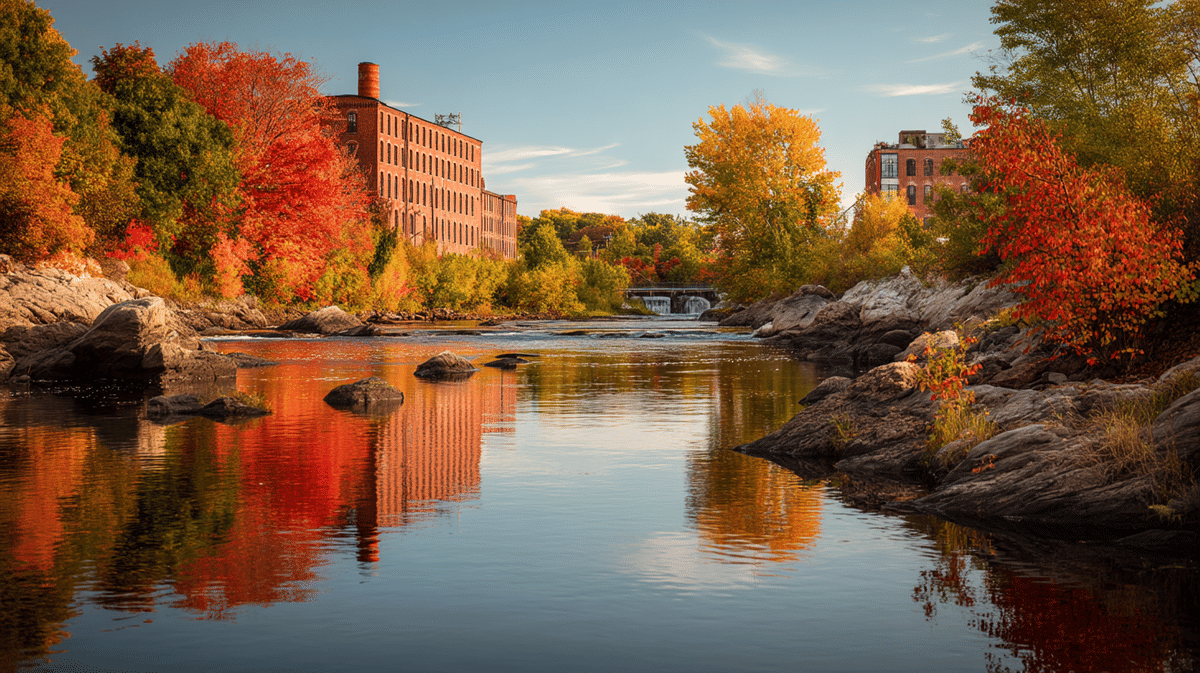
Manchester, New Hampshire sits where New England character meets practical convenience. The city mixes brick mill buildings and a compact downtown with leafy parks and access to outdoor recreation.
You can find walkable neighbourhoods near Elm Street, lively dining options around downtown Manchester, and quieter streets that still feel within an hour’s drive of larger cities like Boston. When looking at houses for sale in Manchester, you’ll definitely want to check out Manchester.
What’s The Housing Market Like In Manchester, New Hampshire?
Home values in Manchester have been above the regional median but still lower than many coastal New England markets. In October 2025 the median sale price was about $433,000, according to Redfin, reflecting recent softening after a high-demand run.
Inventory and days on market vary by Manchester neighbourhood. Citywide, homes sell in roughly 26–35 days, but downtown and mill-district lofts have recently seen median sale prices around $280K–$350K and go under contract in about 30 days.
Buyers who want walkability and a short commute to Elm Street, the Millyard or the hospitals often focus on Downtown Manchester, where average home values sit in the mid-$300Ks, while North End and east-side pockets around Derryfield Park and Derryfield Country Club typically offer larger homes with more interior space, with recent sales clustering in the mid-$400Ks to low-$500Ks.
Across the city, the average home value is about $428K, so treat these median and neighbourhood figures as a current snapshot rather than a guarantee, because inventory, pricing and days on market can shift month to month.
What Are The Best Neighborhoods In Manchester, New Hampshire?
“Best” depends on what you value. Downtown Manchester suits people who want a walkable scene with restaurants, Palace Theatre programming, and easy access to the Currier Museum of Art. Elm Street and the Millyard area are popular with those who prioritise transit and compact living. Derryfield Country and neighborhoods to the south and west offer larger lots and quieter streets, with easy access to outdoor recreation and ski areas within a short drive.
Suburban areas within the Manchester metro serve commuters heading toward Concord or Boston along I-93, and pockets near the Manchester-Boston Regional Airport have good access for frequent travelers. The city’s mix means you can find both apartment-style living and small homes in a short radius.
What Are The Most Popular House Types in Manchester, New Hampshire?
Rowhouses and converted mill lofts are common in and near the downtown core, offering smaller square footage but strong walkability. Detached smaller homes dominate the city’s outer neighbourhoods; many were built mid-20th century and offer larger yards and garages. Newer townhouses and infill builds have appeared near transit nodes and main thoroughfares, providing a middle ground between condos and smaller homes.
Across the market you will also see colonial-era homes and renovated mill buildings that retain historic character, which appeals to buyers who want architectural detail and proximity to local venues like millyard museums and community events.
What Is The Cost Of Living In Manchester, New Hampshire?
Overall cost of living in Manchester tends to be modestly above the national average, driven primarily by housing and utility costs. PayScale’s cost-of-living estimates put Manchester roughly 12% above the U.S. average, though individual budgets vary by household income and housing choice.
On taxes, New Hampshire has no general income tax on wages and no statewide sales tax, which changes the calculus compared with many U.S. cities; property tax and utilities are notable line items to factor in. Grocery stores, local services, and many amenities are competitively priced for southern New Hampshire, which helps offset some housing costs for residents who find affordable units.
Who Are The Major Employers in Manchester, New Hampshire?
Healthcare and education anchor much of the local job base. Elliot Health System and Catholic Medical Center are among the largest private employers and they both draw staff from across southern New Hampshire and nearby Massachusetts. Elliot Health System was noted in 2025 employer rankings and local lists as a top regional employer.
Other significant employers include Manchester-Boston Regional Airport operations and related logistics, local government, and a range of professional services that have located in renovated mill buildings around the downtown. The mix provides jobs in clinical care, airport services, education, and back-office functions.
Is It Easy To Commute in Manchester, New Hampshire?
Commuting options include I-93 and local routes that connect to Concord, Nashua, and the Massachusetts border; many commuters drive to jobs in nearby cities. The Manchester Transit Authority operates fixed-route and commuter services linking Manchester with Nashua and Concord, which helps some riders avoid highway traffic.
For regional travel, Manchester-Boston Regional Airport keeps Manchester well connected by air; passenger numbers were reported at about 1.27 million in 2024, reflecting its role as the regional gateway. Road and rail options to Boston are viable for regular commuters, but typical drive times depend heavily on rush-hour congestion and exact origin/destination points.
How are the Schools in Manchester, New Hampshire?
Manchester School District serves about 12,000 PK–12 students across 13 elementary schools, four middle schools and several high schools, including Beech Street, Green Acres, Hillside Middle and Manchester Central, West and Memorial.
The district site lists calendars, programmes and contacts, and notes that it supports roughly 2,500 multilingual learners, about 40% of all English learners in New Hampshire, with student–teacher ratios around 12:1 and recent proficiency of roughly 16% in math and 28% in reading.
Residents can also look at charter options such as The Founders Academy and Kreiva Academy, or private schools like Trinity High School and The Derryfield School, plus nearby colleges including Southern New Hampshire University, UNH Manchester and Manchester Community College.
Is Manchester, New Hampshire A Safe Place To Live?
Manchester Police Department data shows total reported crime has fallen about 15% year over year and is roughly 31% lower than the 10-year average. Recent estimates put Manchester at around 21 reported crimes per 1,000 residents each year, including about 4 violent crimes and 17 property crimes per 1,000, which works out to roughly a 1-in-49 chance of being a victim of a reported crime. The department posts monthly statistics and interactive dashboards, so you can see how violent and property crime trends are changing and compare the last few years directly.
New Hampshire as a whole remains a low-crime state, with a 2023 violent crime rate of about 107 incidents per 100,000 residents, roughly 70% below the U.S. average, and a property crime rate of about 889 per 100,000, around half the national rate. When you evaluate safety, start with these citywide and state benchmarks, compare them with nearby towns and national figures, then use Manchester’s latest annual report and crime dashboards to check recent neighbourhood-level patterns.
What’s The Community Like in Manchester, New Hampshire?
Manchester has a real city buzz, but you are never far from the outdoors. You have riverfront parks, winter trails that work for cross-country skiing, and easy day trips to ski areas in the nearby mountains. Weekends fill up with festivals, farmers markets, and shows at spots like the Palace Theatre or the Millyard Museum. People like the mix of old mill buildings, walkable streets around Elm Street, and quieter suburban neighbourhoods a short drive away.
There is an active calendar of community events across summer and winter, from waterfront activities to indoor educational programs at centers like the McAuliffe-Shepard Discovery Center. The result is a city that feels both urban and outdoor, with amenities for many different lifestyles.
What Are The Best Things To Do In Manchester, New Hampshire?
Spend a day at the Currier Museum of Art and then catch a show at the Palace Theatre for arts and culture. For science and educational programs, the McAuliffe-Shepard Discovery Center and the Millyard Museum offer rotating exhibits and hands-on learning. Manchester also supports outdoor recreation with riverfront parks, cross-country trails, and quick access to downhill ski areas within an hour’s drive, so outdoor activities are easy to fit into a weekend.
You will not struggle to find something to eat in Manchester. There are cosy neighbourhood bakeries, family diners, and newer restaurants clustered downtown if you want a night out. The city’s venues bring in concerts and live shows, the Fisher Cats draw crowds on game days, and seasonal festivals give local makers and food vendors a chance to take over the streets.
FAQs
Moving to Manchester typically costs less for housing than Boston, though transportation costs can vary. Median home values in Manchester were around $433,000 in October 2025 per Redfin; Boston-area prices are generally higher, which makes Manchester a more affordable living option for many.
The Manchester Transit Authority runs fixed-route and commuter bus services that connect Manchester with nearby towns including Nashua and Concord; local routes serve downtown and neighborhoods, and the airport provides regional air service.
Yes. Manchester is home to major providers like Elliot Health System and Catholic Medical Center. Both offer broad hospital and specialist services, and they are also two of the city’s biggest employers, so healthcare is a major local anchor.
In winter, locals use the parks and nearby trail networks for cross-country skiing and snowshoeing, and downhill ski areas are an easy drive away for weekend trips. When it is really cold, the focus shifts to indoor events, museum programs, and other seasonal activities around the city.
Downtown Manchester is fairly compact, so you can walk between many restaurants, museums, and cultural venues in just a few blocks. The old mill buildings and the neighbourhoods close to Elm Street give residents who live there good day-to-day access to shops, cafes, and services on foot.