
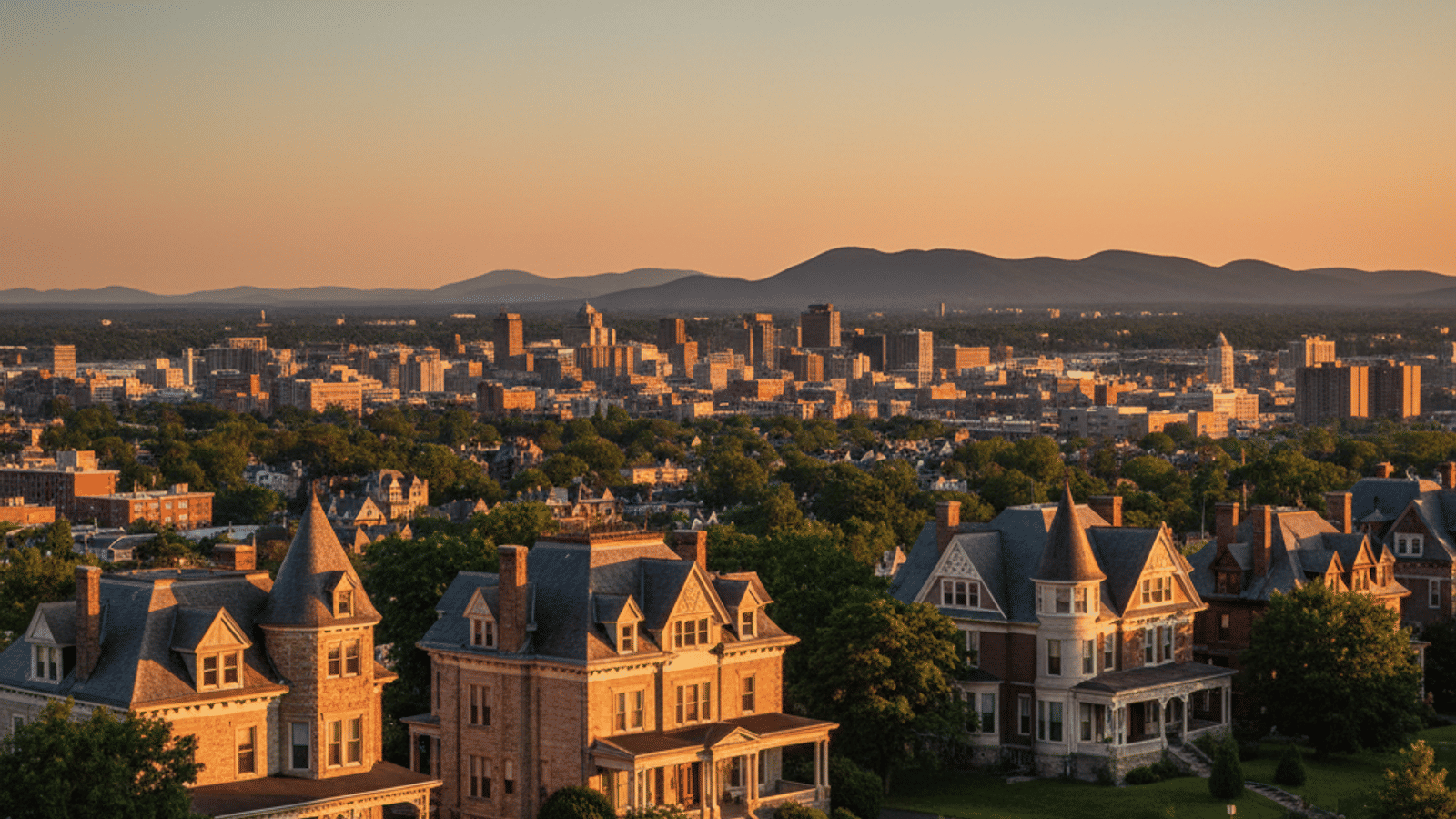
When people ask me to describe Hanover Hill, the first thing I mention isn’t the houses—it’s the elevation. Located just east of downtown Manchester, this neighborhood physically rises above the city center, giving many residents front-row views of the city skyline and the Uncanoonuc Mountains in the distance.
It is a neighborhood that feels like a bridge between eras and lifestyles. You get this distinct urban-suburban blend where historic Victorian architecture sits alongside the modern energy of city living. It’s not quite the sleepy suburbs, but it’s definitely not the dense city grid of downtown either. It has its own heartbeat, perhaps best known for the iconic “Glendi” festival that takes over the streets every September. If you are looking for a place with character, grit, and some of the best views in the Queen City, this is where you start looking.
Location & Commute: The Best of Both Worlds
Geographically, Hanover Hill is a well-defined pocket of Manchester. It is roughly bordered by Bridge Street to the north, Mammoth Road to the east, Laurel Street to the south, and the Wilson/Ashland Street corridor to the west. Because of this central placement, you aren’t stuck on the outskirts; you are right in the mix.
For commuters, the logistics here are hard to beat. You have immediate access to downtown Manchester—in fact, for many residents on the lower western slopes, the city center is walkable on a nice day. If you need to head out of town toward Concord or Boston, you can easily connect to I-93 via Wellington Road or Bridge Street (using Exits 6 and 8).
While the neighborhood has a classic grid layout that encourages walking the dog or strolling to the corner store, most major errands are still going to require a car. It’s a neighborhood where you might walk to a park or a neighbor’s house, but you’ll likely drive for the weekly grocery run.
Hanover Hill Real Estate Market in 2026
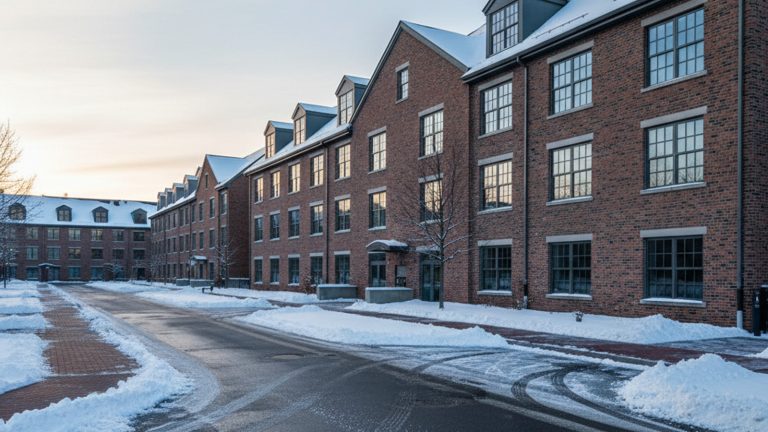
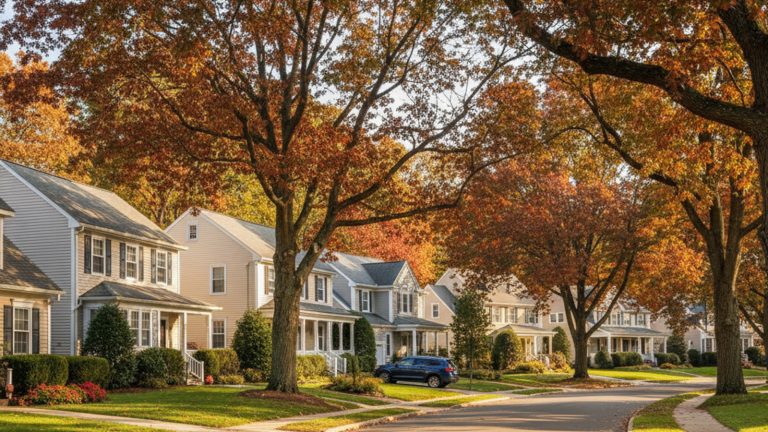
The housing stock here is one of the neighborhood’s biggest draws. You aren’t going to find cookie-cutter subdivisions. Instead, the streets are lined with a mix of historic single-family homes—think stunning Victorians and sturdy Craftsman bungalows—and the classic New England “triple-deckers” that are incredibly popular with investors and owner-occupants looking for rental income.
As we settle into 2026, the market in Hanover Hill remains competitive, though it has stabilized a bit compared to the frantic pace we saw a few years ago. Inventory is still tight because people tend to hold onto these properties once they get them. We are seeing median sale prices hovering in the $500,000 to $550,000 range. Of course, that number fluctuates depending on whether you are looking at a renovated single-family Victorian or a multi-family unit needing some love.
The rental market here is also robust. Because of the high number of multi-family homes, there are usually options for renters, but demand keeps prices higher than the state average. You can expect average rents to sit around $2,200 per month. With a vacancy rate historically low (often under 1%), finding a spot can take some patience.
Lifestyle & Community Atmosphere
Living in Hanover Hill means being part of a community that is genuinely diverse. You have a refreshing mix of long-time residents who have been here for decades living right next door to new professionals who just moved to Manchester for work. It creates a neighborhood dynamic that feels grounded and real.
A major cultural anchor for the area is the St. George Greek Orthodox Cathedral. It’s more than just a beautiful landmark; it is the heart of the neighborhood’s social calendar.
This is most evident during the annual Glendi Festival. Every September, the neighborhood transforms. We are talking about a massive block party celebrating Greek culture with incredible food, live music, and dancing. It draws people from all over New England, but for Hanover Hill residents, it’s right in their backyard. It is those moments that give the Hill a strong sense of identity that you don’t always find in other parts of the city.
Parks & Recreation: Derryfield Park and Beyond
If you love green space, Hanover Hill punches way above its weight class thanks to Derryfield Park. This isn’t just a small patch of grass; it is 76 acres of rolling hills, cross-country trails, sports fields, and a playground. It is the kind of place where you can spend an entire Saturday afternoon and not run out of things to do.
Inside Derryfield Park, you will find the Weston Observatory. This historic lookout tower is listed on the National Register of Historic Places and offers panoramic views that are honestly some of the best in the state. It’s a favorite spot for locals to catch a sunset or just get a fresh perspective on the city below.
For a quieter experience, there is Bronstein Park near Hanover and Beech Streets, which features walking paths and historic statues. And if you are into winter sports, the McIntyre Ski Area is just to the north, making it incredibly easy to hit the slopes after work without a long drive.
Schools & Education Options
When looking at education in the neighborhood, there are several key institutions right within the vicinity. Hillside Middle School is located directly in the area on Reservoir Avenue, serving grades 6-8. Its proximity makes the morning commute much easier for many households in the neighborhood.
For high school students, Central High School—the oldest public high school in New Hampshire—is located just down Hanover Street. It’s a short distance for students living on the hill. Younger students typically attend nearby elementary schools like Wilson School, though you should always verify the specific district lines for any home you are interested in.
For higher education, you are just a short drive from the University of New Hampshire (UNH) Manchester campus in the Millyard and Southern New Hampshire University (SNHU), offering plenty of options for continuing education nearby.
Safety & Neighborhood Perception
It is important to be realistic: Hanover Hill is an urban neighborhood. While it is often perceived as a quieter residential pocket compared to the denser downtown corridor, it is still part of the city. Crime rates in Manchester are generally higher than in rural New Hampshire towns, so standard city smarts apply here.
On the street level, the neighborhood benefits from good lighting and sidewalks that see plenty of use. The active community presence—neighbors talking on porches, people walking dogs—helps maintain a sense of security. Many blocks have a tight-knit feel where residents look out for one another, which is often the best deterrent of all.
Living in Hanover Hill: Pros and Cons
Deciding if this neighborhood is right for you usually comes down to what you value most in a home. Here is a quick look at the trade-offs.
The Pros:
- Architecture & Views: The housing stock is full of character, and the elevation provides stunning views of the mountains.
- Walkability: You are close to amenities and downtown dining.
- Community: Events like the Glendi Festival create a strong sense of belonging.
- Recreation: Immediate access to the massive Derryfield Park.
The Cons:
- Parking: Many streets are narrow, and if a home doesn’t have a driveway, street parking can be tight, especially during snow emergencies.
- Maintenance: Older homes (Victorians and triple-deckers) often require more upkeep than new construction.
- Urban Noise: Being close to the city means you will hear city sounds—sirens, traffic, and general density noise are part of the package.
Is Hanover Hill Your Next Home?
Hanover Hill offers a unique proposition for buyers in 2026. It is one of the few places in Manchester where you can find historic charm, significant green space, and urban convenience all wrapped into one hillside package. Whether you are an investor looking at a multi-family unit or a buyer seeking a Victorian with a view, the “High Ground” of Manchester has a lot to offer.
If you are curious about what is currently available, now is a great time to explore homes for sale in Manchester NH to see if the Hill is the right fit for your lifestyle.
Frequently Asked Questions
The Glendi is a massive annual Greek festival held in September on the grounds of St. George Greek Orthodox Cathedral. It features traditional Greek food, music, dancing, and shopping, serving as a major cultural event for both the neighborhood and the entire city.
Yes, the lower western sections of Hanover Hill are quite walkable to downtown Manchester, allowing easy access to dining and work. However, the upper sections are steeper and further away, so walking may be more of a workout or leisure activity than a daily commute option.
The neighborhood is defined by its historic architecture, primarily featuring Victorian-era single-family homes and Craftsman bungalows. You will also find many “triple-deckers” (three-story multi-family buildings) that are characteristic of New England industrial cities.
Hanover Hill is very convenient for commuters, sitting just a few minutes from I-93. You can access the highway quickly via Exit 6 (Wellington Road) or Exit 8 (Bridge Street), making trips to Concord or Boston straightforward.
Public school students in Hanover Hill typically attend Wilson School or other nearby elementary schools, Hillside Middle School (located within the neighborhood), and Central High School. Always check current school district maps to confirm assignments for a specific address.