
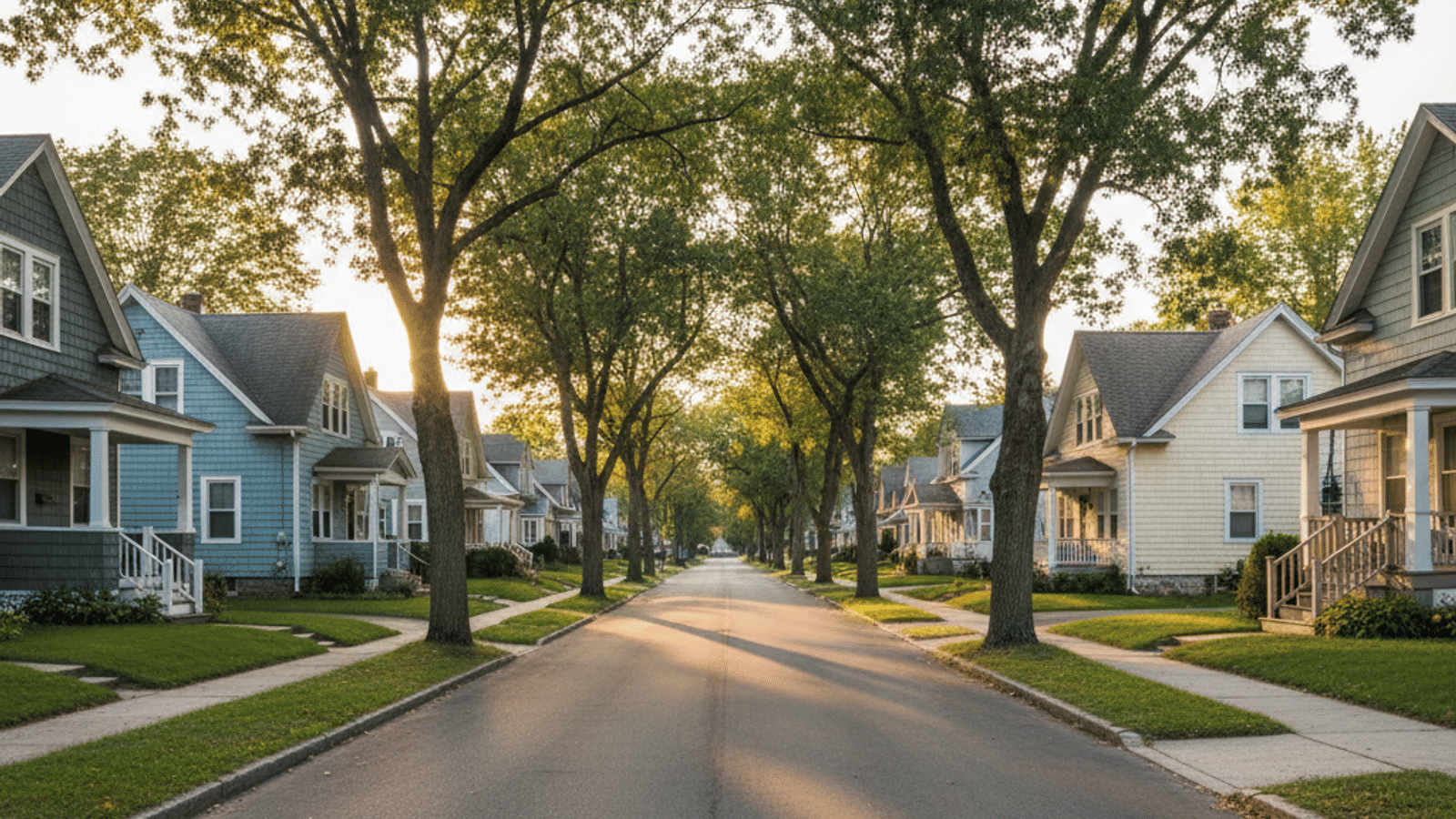
If you’ve been watching the housing market in Manchester lately, you probably already know the headlines. Manchester has been ranked as one of the hottest real estate markets in the country multiple times over the last year. It’s competitive, fast-paced, and frankly, it can feel a little overwhelming when you’re trying to buy your first place.
But here is the good news: despite the rising prices and tight inventory, homeownership here is still very much achievable. You don’t need a mountain of cash or perfect credit to get the keys to a home in the Queen City. With specific New Hampshire programs offering up to $10,000 or even $20,000 in assistance, the math might work out better than you think. This guide is going to walk you through exactly how to navigate the local market, from the dollars and cents to the neighborhoods that offer the best value.
Is Manchester Good for First-Time Buyers? (Market Reality Check)
Let’s be real about what you are walking into. Manchester isn’t the bargain bin it was a decade ago, but compared to the Greater Boston area or even parts of Seacoast NH, it remains one of the most practical places to buy.
Right now, the median sold price for a home in Manchester hovers between $430,000 and $465,000. While that is a jump from a few years ago, it buys you significantly more house here than it would in Massachusetts. The trade-off is the competition. Because so many people are realizing the value here—great job access, city amenities, and a manageable commute—homes do not sit around.
You should expect a seller’s market. The “days on market” average is often very low, hovering around 26 days or less. That means when a good house hits the MLS, you might see multiple offers within the first weekend. It’s not a market where you can “sleep on it” for a week. However, the payoff is living in a vibrant city that is essentially the economic engine of Northern New England, without paying Boston prices.
The Financials: Costs of Buying in the Queen City
The biggest myth stopping renters from buying is the idea that you need 20% down. On a $430,000 home, that would be $86,000 in cash. Fortunately, almost no first-time buyer puts down that much.
- Down Payment: Realistically, most first-time buyers in Manchester aim for 3% to 3.5% down. For a typical starter home in that $430,000 range, that looks more like $13,000 to $15,000. There are even loan programs (which we will cover in a moment) that can cover that upfront cost for you.
- Closing Costs: In New Hampshire, the buyer is responsible for a portion of the transfer tax, plus title and recording fees. You should generally budget between 2% and 4% of the purchase price for these costs. It’s a chunk of change, so it’s important to calculate closing costs in New Hampshire early in the process so you aren’t surprised at the closing table.
- Property Taxes: This is the number that catches many buyers off guard. NH relies heavily on property taxes since there is no income or sales tax. Manchester’s 2024 tax rate is approximately $19.58 per $1,000 of assessed value.
To put that in real terms:
- If you buy a home assessed at $400,000, your annual tax bill would be roughly $7,832.
- That breaks down to about $653 per month added to your mortgage payment.
When you are looking at monthly budgets, always remember to add that tax figure on top of your principal and interest.
First-Time Home Buyer Programs in Manchester & NH
This is the section that can change your financial picture completely. New Hampshire has excellent state-level resources designed to get you into a home.
NH Housing (NHHFA) Programs
The state housing authority offers a few powerful tools. The most popular is Home Flex Plus. This program provides cash assistance (up to a certain percentage of the loan amount) to help cover your down payment and closing costs. In many cases, this assistance is forgivable after four years if you stay in the home. They also offer Home Preferred, which allows for conventional financing with reduced Mortgage Insurance rates, saving you money every month.
First-Gen Homebuyer Program
If your parents did not own a home, you might be eligible for additional assistance. There have been programs offering $10,000 specifically for first-generation buyers to help bridge the affordability gap.
NeighborWorks Southern NH
You will hear this name a lot. NeighborWorks Southern New Hampshire is a non-profit based right here in Manchester. They run the “HOMEteam” education courses, which are often required to qualify for the state grants mentioned above. Beyond just classes, they offer one-on-one counseling and sometimes manage their own local down payment assistance funds.
Tax Credits
Ask your lender about Mortgage Credit Certificates (MCC). If you are eligible, this allows you to claim a portion of the mortgage interest you pay each year as a direct tax credit, rather than just a deduction.
Choosing the Right Loan Type for Manchester
Not all loans work for every property or every buyer. Here is how the common loan types play out specifically in Manchester.
FHA Loans
FHA Loans are incredibly popular here. They allow for a 3.5% down payment and are more forgiving if your credit score is in the 600s. Since the FHA loan limits in Hillsborough County are high enough to cover the vast majority of starter homes, this is often the default choice for first-time buyers.
Conventional Loans
Conventional Loans are great if your credit score is 700 or higher. Programs like Fannie Mae HomeReady allow for down payments as low as 3%. Sellers in a competitive market like Manchester sometimes prefer conventional offers because they perceive them as having fewer strict inspection requirements than FHA loans.
VA Loans
VA Loans are the gold standard if you are a veteran or active service member. They offer 0% down and no monthly mortgage insurance. Manchester has a strong veteran community, and sellers are generally very accustomed to working with VA financing.
Important Note on USDA Loans: You might read online about USDA Rural Development loans that offer 0% down. Manchester city limits are NOT eligible for USDA loans. These loans are strictly for rural areas. If a USDA loan is your only option, you would need to look in surrounding towns like Goffstown, New Boston, or parts of Hooksett.
Best Manchester Neighborhoods for First-Time Buyers
Manchester is a city of distinct neighborhoods, each with a different vibe and price point. Finding the right fit is about balancing your budget with the lifestyle you want.
Hallsville / East Side
If you are looking for affordability, the East Side, particularly around Hallsville, is a solid place to start. You can often find decent entry-level homes and bungalows here in the mid-$300s to low-$400s. It’s dense and walkable, with a real neighborhood feel.
South Side / Somerville
The South Side is very popular for first-time buyers. It tends to feel a bit more suburban and residential while still being minutes from South Willow Street shopping. The housing stock here is sturdy, and it’s a competitive area because it offers a nice middle ground between city living and quiet streets.
Rimmon Heights / West Side
The West Side has a very diverse housing stock. This is where you will find a lot of two-family and three-family homes (triple-deckers). If you are interested in “house hacking”—living in one unit and renting out the others to pay your mortgage—this is the place to look. It’s a smart strategy to offset today’s higher interest rates.
North End
Historically the most aspirational part of the city, the North End is beautiful, with larger Victorian homes and tree-lined streets. While prices here are often at the top of the market (and perhaps out of reach for some first-time budgets), it’s good to keep an eye on the edges of the North End where deals occasionally pop up.
7 Steps to Buying Your First Home in Manchester
Buying a house here is a process, but if you break it down, it’s manageable.
- Education: Start by taking a homebuyer class through NeighborWorks. It’s not just boring homework; it unlocks access to those down payment assistance programs.
- Pre-Approval: Don’t just click a button online. Find a local lender who knows NH Housing programs inside and out. A generic big-box lender might miss the specific grants available to you in Hillsborough County.
- Representation: Hire a Manchester-specific Buyer’s Agent. Remember, the agent on the “For Sale” sign works for the seller, not you. You need someone in your corner.
- The Search: Be ready to move. Inventory turns over in less than 30 days. Set up alerts so you see homes the second they hit the market.
- Making an Offer: In this seller’s market, price isn’t the only lever. Your agent might suggest strategies like escalation clauses or being flexible on the closing date to make your offer stand out.
- Inspection: Never skip this. Manchester has a lot of older housing stock—homes built in 1900 or 1920 are common. You need to know about lead paint, radon, and the condition of that 100-year-old foundation.
- Closing: This is the finish line. You’ll sign a stack of papers, pay your closing costs, and get the keys.
Frequently Asked Questions
Yes, though the programs are typically administered at the state level by New Hampshire Housing (NHHFA) rather than the city itself. Manchester residents can access “Home Flex Plus” for down payment assistance and “Home Preferred” for lower mortgage insurance costs.
You generally do not need 20% down. Most first-time buyers in Manchester use loan programs that require between 3% and 3.5% down. For a $400,000 home, that is roughly $12,000 to $14,000, and state assistance programs can help cover this amount.
No, properties within the Manchester city limits are not eligible for USDA Rural Development loans. USDA loans are geographically restricted to rural areas; however, nearby towns like Goffstown or parts of Hooksett may have eligible areas.
Income limits vary by program and household size, but they are designed to be accessible for the middle class. In Hillsborough County, the limit is often upwards of $135,000+ for a 1-2 person household, meaning many working professionals qualify for assistance.