
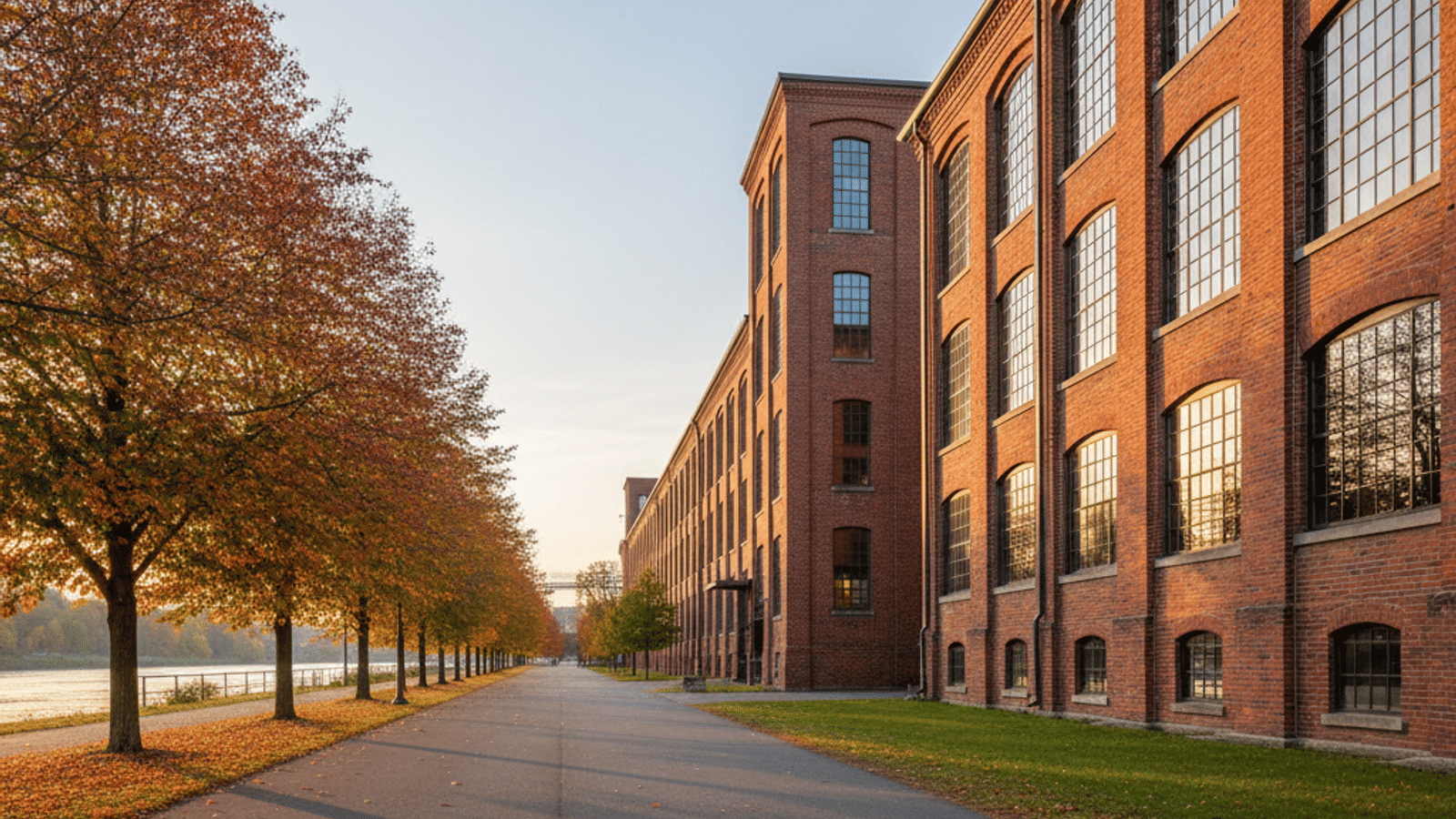
If you stand in the middle of the Millyard on a crisp morning, you get a perfect snapshot of what Manchester is all about. On one side, you have massive, red-brick textile mills from the 19th century that feel heavy with history. On the other side, those same buildings are humming with modern biotech labs, software companies, and universities.
It’s a city of contrasts. Located just 50 miles north of Boston, Downtown Manchester has evolved from a purely industrial center into a vibrant, walkable neighborhood. The vibe here is often described as “gritty but growing.” It doesn’t have the polished, manicured feel of a wealthy suburb, and locals wouldn’t want it to. Instead, it offers genuine character, a burgeoning nightlife, and a convenient location for people who want city amenities without the astronomical Boston price tags.
Life on Elm Street and Beyond: Dining & Entertainment
When people talk about “going downtown,” they usually mean hitting Elm Street. This is the main artery of the city, and over the last decade, the density of dining and entertainment options here has exploded. It wasn’t long ago that your options were limited, but the current “foodie” scene is legit. You can find everything from high-end steak tips and craft cocktails to authentic tacos and quick-service spots.
Culturally, the city punches above its weight. The historic Palace Theatre brings in Broadway-caliber shows, while the SNHU Arena anchors the south end of Elm Street, drawing major concerts and sports events that fill the local bars before and after the show.
It’s not all indoors, though. Residents head to Arms Park and the Riverwalk to run or walk their dogs with views of the Merrimack River and the mill architecture. The community energy peaks during events like the annual Taco Tour, which shuts down the streets and draws massive crowds, or the summer markets in Veteran’s Park.
- Dining: Heavy concentration on Elm St; growing variety of international cuisine.
- Nightlife: A mix of dive bars, speakeasies, and event-driven crowds from the Arena.
- Outdoors: Riverfront access is the highlight, though green space is urban (paved paths/parks).
Housing Market: Lofts, Condos, and Rent Trends
If you are looking at the Manchester NH real estate market downtown, you are mostly looking at two distinct types of inventory: converted mill lofts and traditional apartments.
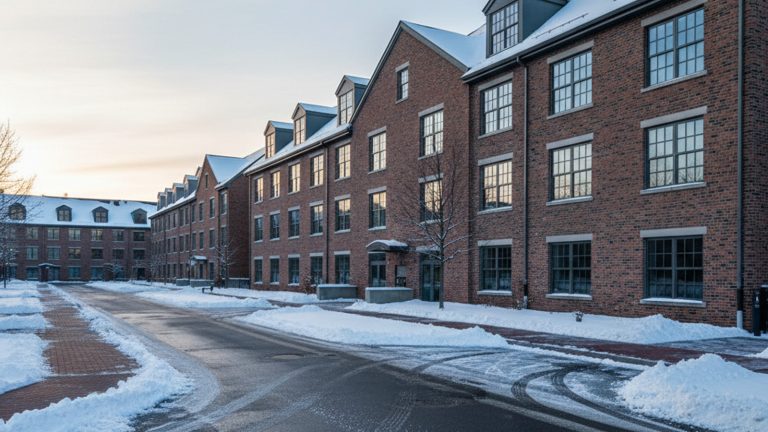
The Mill Lofts are the signature housing stock here. These are the units you see on Instagram—massive windows, exposed brick, and 12-foot ceilings. They are undeniably cool and offer great river views. However, they come with trade-offs. The walls can be thin (noise travels), and heating a space with 15-foot ceilings in a New Hampshire winter isn’t cheap.
Traditional Apartments are found mostly above the storefronts along Elm Street and the immediate side streets. These tend to be older walk-ups. They put you right in the middle of the action, but they can be noisier on Friday and Saturday nights.
Condos are much harder to come by in the immediate downtown core. Most of the inventory is rental-based. When condos do list, competition is fierce because vacancy rates in Manchester are historically tight.
As of early 2026, here is what the market looks like:
- Studio Rent: Expect to pay roughly $1,500 – $1,650 per month.
- 1-Bedroom Rent: usually lands between $1,800 – $2,000 per month.
- Median Condo Price: If you can find one, prices generally range from $380,000 – $420,000.
Cost of Living: Budgeting for Downtown Life
While moving to New Hampshire is generally more affordable than staying in the Greater Boston area, downtown living has its own premium. When you are building your monthly budget, you need to look beyond just the rent check.
Utilities are the biggest variable. As mentioned earlier, if you choose a mill loft, you need to ask about average electric bills. Many of these buildings rely on electric heat, and during a cold snap in January, that bill can shock you if you aren’t prepared.
Parking is the other major line item. Unlike the suburbs where driveways are free, downtown living almost always requires a monthly garage pass. You also need to factor in that while NH has no sales tax—a huge perk for your daily spending—property taxes are high. Even if you rent, that cost is baked into your lease price.
- Parking Costs: Plan for $85 – $115 per month per vehicle for a garage pass.
- Dining/Entertainment: Cheaper than Boston, but pricier than rural NH.
- Tax Benefit: No state income tax on wages and 0% sales tax helps balance the budget.
The Logistics: Parking, Commuting, and the Winter Ban
If you ask a local for one piece of advice about living downtown, they will almost certainly say: “Figure out your parking situation.”
Manchester enforces a strict Winter Parking Ban from December 1 through April 15. During this window, overnight street parking is heavily restricted (often odd/even side rules) and completely banned during snow emergencies. The city does not mess around with this; they tow aggressively. If you don’t have off-street parking, you will spend your winter nights moving your car or risking a ticket.
Securing a monthly permit at a garage like the Victory or Pearl Street garage is the best move, but be aware that waitlists can pop up.
For commuters, the location is solid. You have immediate access to I-293 and I-93. While there is currently no commuter rail train to Boston, the Boston Express bus service is reliable and a popular option for hybrid workers who only head into the hub a few times a week.
Economy & Employers: Working in the Millyard
For many residents, the commute is just a walk down the street. The economic engine of the city has shifted from textiles to technology. The Millyard is now a hub for bio-fabrication (led by the ARMI initiative), higher education (SNHU has a major presence), and engineering firms like DEKA.
This revitalization means the downtown area isn’t just a dormitory for commuters; it’s a working neighborhood. Co-working spaces have popped up to serve the remote crowd, and fiber internet is standard in almost all the renovated mill buildings.
Safety & Neighborhood Dynamics
Is downtown safe? This is a common question for anyone investigating the cost of living in NH cities. The honest answer is that Manchester is an urban environment, and it requires the same situational awareness you would use in any city.
The downtown core (Elm Street and the Millyard) is generally well-patrolled and busy, which adds a layer of safety. You will see unhoused populations and activity in public parks, which is a reality of city living here. Areas immediately surrounding the downtown core, sometimes called the “Tree Streets,” can be grittier and have higher police activity. Conversely, the North End, which is just a short walk up Elm Street, is quiet and residential.
For most residents, the “grit” is just part of the city’s character, and violent crime is typically targeted rather than random.
Pros and Cons of Living in Downtown Manchester
If you are on the fence, here is a quick way to weigh your options.
Pros:
- Walkability: You can truly live here without driving for every errand.
- History: The architecture gives your home a unique character you won’t find in a new build.
- Location: You are an hour from the beach, an hour from the White Mountains, and an hour from Boston.
- Taxes: No income tax on your paycheck.
Cons:
- Parking: The winter ban is a logistical headache if you rely on street parking.
- Groceries: There is no major grocery store directly in the downtown core. You have to drive to the fringes (like the Market Basket on Elm’s southern end) to do a full shop.
- Utilities: Heating large industrial spaces can be expensive.
Frequently Asked Questions
No, there is currently no commuter rail service connecting Manchester to Boston. Commuters typically drive or take the Boston Express bus, which has a terminal just south of the downtown area.
If you are renting an apartment without a dedicated spot, you should budget for a monthly garage permit. As of 2026, these generally cost between $85 and $115 per month, depending on the garage.
They can be. While aesthetically pleasing, the combination of high ceilings, large historic windows, and electric heating systems often results in higher-than-average winter utility bills compared to standard drywall apartments.
Downtown Manchester is generally safe, especially along the main drag of Elm Street which remains active at night. However, like any urban center, it is smart to stay on well-lit main roads and maintain situational awareness, particularly on the side streets late at night.