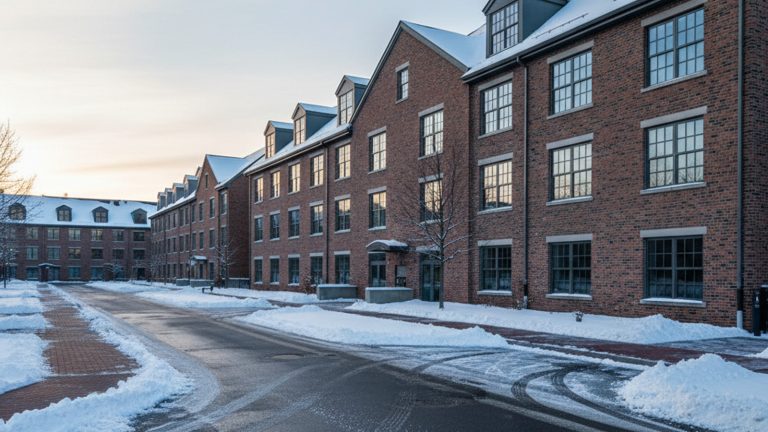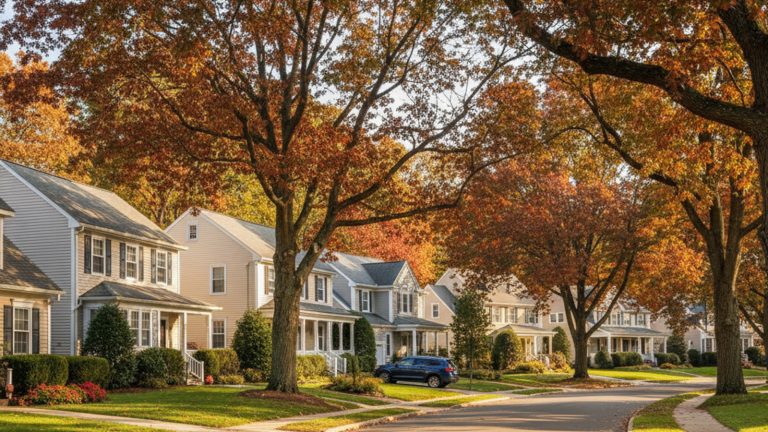

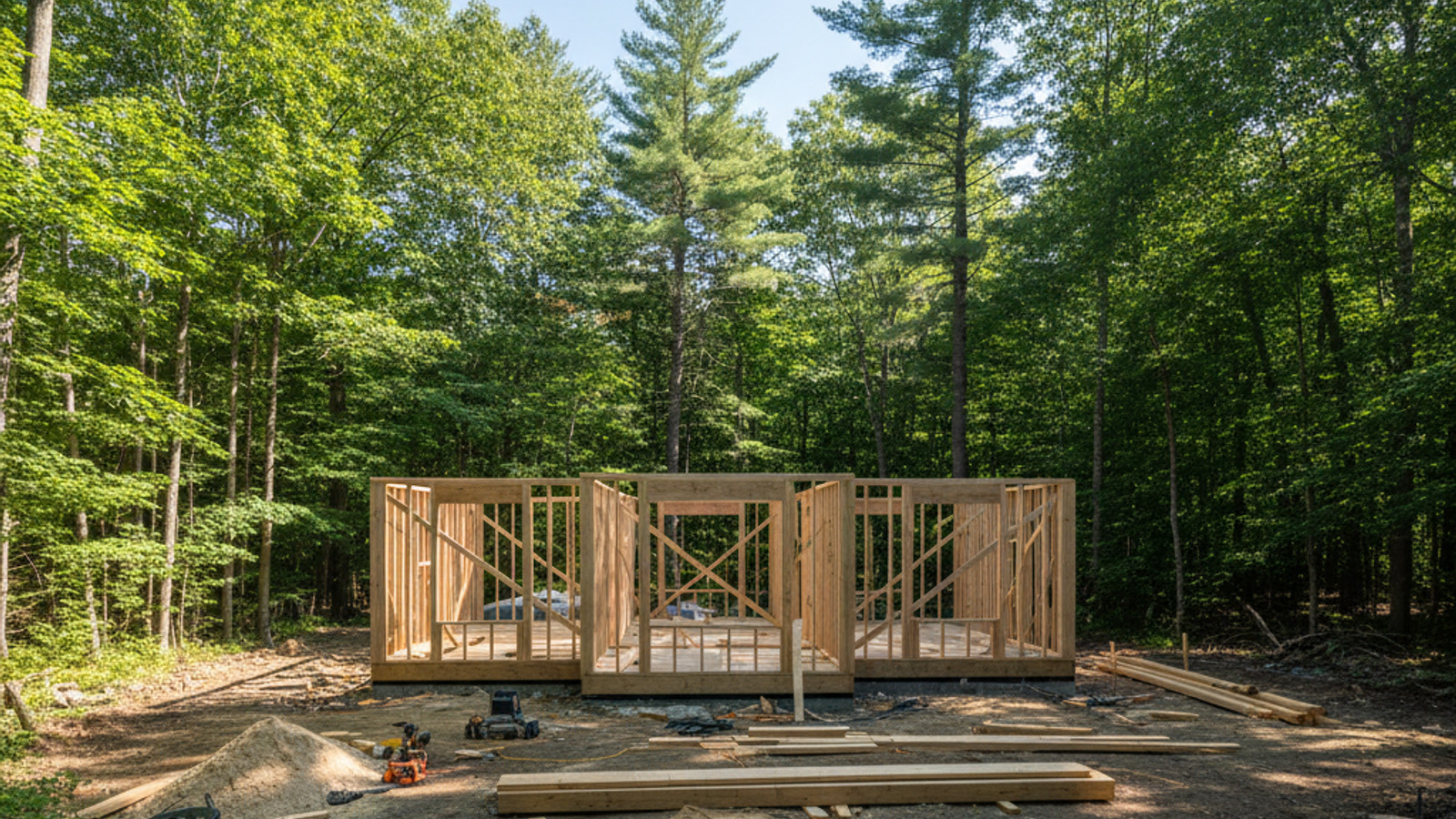
If you have been hunting for a home in Manchester lately, you know the struggle. We are looking at historically low inventory levels right now – sitting at roughly 1.1 months of supply here in late 2025. When a good property hits the market, it’s usually under contract within about 35 days, often after a stressful multiple-offer situation.
For many buyers, the solution isn’t to keep fighting over existing 1950s capes or colonials. It is to build.
Building a custom home lets you bypass the bidding wars entirely. Instead of compromising on a layout that doesn’t work for you, you get exactly what you want. However, building in the Queen City comes with its own set of rules, costs, and quirks. Whether you are looking at a custom home designed from scratch by an architect or a production home in a new subdivision, you need to know what you are getting into before you break ground.
Let’s look at what it actually takes to build here in 2026.
Cost to Build a House in Manchester, NH (2026 Data)
The first question everyone asks is: “What is the price per square foot?” It is a tricky number because it depends heavily on your finishes, but we can look at some realistic averages for Southern New Hampshire right now.
Hard Costs (The Structure) For a true custom home with mid-to-high-end finishes, you should budget between $250 – $400+ per square foot. If you are looking at more modest finishes or modular construction, you might be able to get that down closer to the $200 per square foot range, but that is becoming harder to find.
Soft Costs (The Paperwork & People) Don’t forget the “invisible” costs. Architectural fees, engineering plans, and permits typically eat up about 20 – 30% of your total budget. You need to have cash on hand for these before a bank will even release construction funds.
Site Prep (The “Granite State” Factor) There is a reason we call New Hampshire the Granite State. When you dig a hole in Manchester, there is a decent chance you will hit ledge (solid rock). Excavation costs here can vary wildly. If your lot requires blasting to put in a foundation, that can add thousands to your site prep budget instantly.
Permit Fees The City of Manchester calculates permit fees based on the estimated cost of construction. The current formula is the Cost of Construction x 0.006.
- Example: If your build cost is $400,000, your permit fee is roughly $2,400 (plus a small administrative fee).
Finding Land: North End (03104) vs. West Side (03102)
Finding the dirt is often harder than building the house. Manchester is a mature city, so we don’t have thousands of acres of open land waiting for development. Most opportunities now are specific to a few key zip codes.
The North End (03104) This area is known for larger, estate-style lots and distinct architecture. Because it is so established, vacant land here is incredibly scarce. When a prime lot does appear, it can command $300,000 or more.
- Trend to watch: Because land is so tight, we are seeing more “teardowns.” Buyers are purchasing dilapidated homes purely for the lot, demolishing the structure, and building new.
- Zoning: Pay attention to setbacks here. This area often requires houses to be set further back from the street compared to other parts of town.
The West Side / Rimmon Heights (03102) If you are looking for something more affordable, the West Side offers better “in-fill” opportunities. You are more likely to find smaller lots—think 0.25 to 0.35 acres—in the $50,000 – $100,000 range.
- Context: These lots are often situated in established neighborhoods, meaning you will be building closer to neighbors.
- Zoning: Always check if the lot is R-1A or R-1B. This dictates your frontage requirements (how wide the lot needs to be at the street).
If you are struggling to find land, check out our latest Manchester NH real estate market update to see what new parcels might have just been listed.
The Manchester Build Process: Step-by-Step
Once you have your land (or a promise of it), the real work begins. Here is how the workflow typically goes in the city.
1. Financing Unless you are paying cash, you will likely need a Construction-to-Permanent Loan. This is a “single-close” loan that pays for the land and the build, then converts to a standard mortgage once you move in. Rates in 2026 are hovering around the 6.5% – 8.5% range for these products.
2. Site Feasibility Before you close on the land, verify your utilities. Contact Manchester Water Works to see if public water and sewer are available at the street. If not, you will need to budget for a well and septic system, which changes your engineering needs completely. Also, get a test pit dug to check for that granite ledge we mentioned earlier.
3. Permitting You will submit your architectural plans to the Department of Planning and Community Development. They review everything to ensure it meets zoning and safety standards.
- Cost Note: Remember the formula: Estimated Cost x 0.006 + a $25 admin fee.
4. Inspections The city will inspect your home at several milestones. You generally can’t move to the next phase until the inspector signs off on the current one:
- Foundation (before pouring concrete).
- Framing.
- Rough-in (plumbing, electrical, and mechanicals).
- Insulation.
- Final walkthrough for your Certificate of Compliance.
Navigating City of Manchester Regulations
There are a few regulatory hurdles specific to Manchester that you should keep in mind to avoid headaches later.
Building Codes Manchester adheres to the latest International Building Code (IBC) and International Residential Code (IRC). Your architect needs to be up to date on these specific year versions, as they dictate everything from staircase width to window efficiency.
Permit Expiration This is a big one. Once you get your permit, the clock starts ticking. Work typically must commence within 6 months to keep the permit valid. If you pause construction for too long, the permit can expire, forcing you to re-apply and pay fees again.
Impact Fees New residential units in Manchester may be subject to impact fees. These are one-time charges meant to offset the strain a new home puts on city infrastructure, like schools and fire departments. Ask the Planning Department about these early so they don’t surprise you at the end.
Online Portal The City of Manchester has modernized significantly. You can now process many permits through their online portal, which speeds things up. However, for full custom home plans, they may still require physical paper copies for the review board.
Choosing a Builder: Design-Build vs. General Contractor
Who you hire will determine how smooth this process is. In Southern NH, you generally have three paths.
Design-Build Firms These companies handle everything under one roof—architecture, engineering, and construction. This is often the best route for complex custom homes, especially in the North End (03104), because the designer and the builder are on the same team from day one. It minimizes miscommunication.
General Contractor (GC) If you already have a set of blueprints from an independent architect, you will hire a General Contractor to execute that vision. This works well if you have a very specific design in mind and want to bid out the construction cost to different builders.
Modular and Prefab This is a growing trend in New Hampshire. Because our building season is shortened by winter, modular homes allow the structure to be built indoors while the foundation is being poured on-site. It can shave months off the timeline—taking a project from 9-12 months down to 3-6 months.
If you are interviewing pros, make sure you know the right questions to ask your home builder before signing a contract.
Frequently Asked Questions
How much does a building permit cost in Manchester, NH?
The permit fee is calculated based on the estimated cost of construction. The formula is the cost of work multiplied by 0.006. For example, a $500,000 build would result in a permit fee of $3,000, plus a small administrative processing fee.
Is it cheaper to buy or build a house in Manchester, NH?
Buying an existing home is almost always cheaper upfront than building a custom home. However, building saves you from immediate renovation costs and the potential overpayment often required to win a bidding war on an existing property.
What is the average timeline to build a custom home in NH?
For a traditional “stick-built” home, you should expect the process to take 9 to 12 months from breaking ground to moving in. This timeline can be extended if the build runs through the harsh winter months, which can delay foundation and exterior work.
Can I build a modular home in Manchester, NH?
Yes, you can build a modular home in Manchester. As long as the home meets the local zoning ordinances and the adopted building codes, the city treats it the same as a traditional site-built home.