

If you are looking into moving to New Hampshire, you’ve likely narrowed your search to the “Manchester-Nashua corridor.” It’s the economic engine of the state, and right in the middle of it sits the choice between Manchester—the state’s largest city—and Merrimack, its sprawling suburban neighbor.
While these two municipalities share a border, the daily living experience in each is vastly different. Manchester offers an urban “Queen City” vibe with distinct neighborhoods, a walkable downtown, and a bustling nightlife scene. Merrimack, on the other hand, offers a quieter lifestyle, known for its massive outlet mall, brewery, and wooded residential lots.
Both locations are part of a hot real estate market, but the right choice usually comes down to whether you prioritize walkability and culture or open space and a slightly shorter commute.
At a Glance: Manchester vs. Merrimack
For those trying to get a quick read on the differences, here is how the two compare on the major factors buyers usually ask about first.
- Vibe: Manchester is urban and dense; Merrimack is suburban and spread out.
- Housing Price: Manchester generally offers a more affordable entry point (mid-$400K range), while Merrimack medians often push north of $500K for single-family homes.
- Commute: Merrimack is located further south on the Everett Turnpike, shaving about 10–15 minutes off a drive to the Massachusetts border compared to Manchester.
- Amenities: Manchester wins on dining and nightlife; Merrimack wins on retail shopping (Outlets) and quieter weekends.
Cost of Living and Housing Market
When we talk about the cost of living in this part of Southern New Hampshire, housing is the biggest variable. While other costs like groceries and utilities are roughly the same across town lines, your mortgage or rent check will look different.
In terms of purchase price, Manchester is often the more accessible option. You can typically find single-family homes in the low-to-mid $400,000s, and there is a robust market for condos and multi-family properties if you are an investor or house-hacker. Merrimack’s market is tighter and more expensive. Because the town has a higher inventory of larger Colonials and newer developments, the median price for a single-family home frequently exceeds $500,000. Bidding wars are common in both towns, but the inventory moves particularly fast in Merrimack due to high demand from commuters.
If you are renting, the dynamic shifts slightly. Manchester has a massive supply of rentals, ranging from affordable older apartments to luxury mill lofts. Merrimack has limited rental inventory, mostly confined to large, modern apartment complexes. Because stock is low and demand is high, the average rent in Merrimack often hovers around $2,100+ per month, which can be steeper than many comparable units in the city.
Property taxes are always a hot topic here. It is important to look at New Hampshire property taxes carefully since we don’t have income or sales tax.
- Manchester Tax Rate: ~$19.58 per $1,000 of assessed value.
- Merrimack Tax Rate: ~$20.69 per $1,000 of assessed value.
While the rates are reasonably close, remember that the assessed value of the homes in Merrimack tends to be higher, which often results in a larger annual tax bill compared to a modest home in Manchester.
Lifestyle and Amenities: City Streets vs. Premium Outlets
The biggest trade-off between these two is how you spend your free time. Manchester is the cultural hub of the region. If you enjoy being able to grab an Uber or walk to dinner, the Elm Street corridor is unbeatable. It is packed with bars, diverse restaurants, and coffee shops. You also have major venues like the SNHU Arena for concerts and the Currier Museum of Art for culture. There is a grit and energy to the city that many residents love.
Merrimack offers a completely different “destination” style of living. It doesn’t have a traditional walkable downtown. Instead, commerce is centered around large plazas. The crown jewel is the Merrimack Premium Outlets, which draws shoppers from all over New England. You also have the Anheuser-Busch Brewery, famous for its Clydesdales and tour experiences.
For outdoor enthusiasts, both towns have plenty to offer. Manchester residents flock to Lake Massabesic for trails and kayaking (no swimming allowed, as it’s the water supply), while Merrimack residents enjoy the Horse Hill Nature Preserve, which offers hundreds of acres of hiking and biking trails.
Commuting and Location
If your commute is likely a deciding factor. Merrimack has a distinct geographic advantage here. It sits directly on the Everett Turnpike (Route 3) and is physically closer to the Massachusetts line. Without traffic, a drive from Merrimack to Boston takes about 45–55 minutes.
Manchester is just one town north, but that adds distance. The drive to Boston is closer to 55–65 minutes without traffic. However, Manchester offers better connectivity in other directions. It sits at the intersection of I-93 and I-293, making it easier to get to the White Mountains or, via Route 101, out to the Seacoast beaches. Manchester is also home to the Manchester-Boston Regional Airport (MHT), which is a huge perk for frequent flyers who want to skip the chaos of Logan Airport.
Traffic patterns differ, too. In Merrimack, the congestion is usually focused on the Turnpike near the outlets. In Manchester, the I-93/293 interchange and the bridges crossing the Merrimack River can become bottlenecks during rush hour. If you rely on public transit, Manchester has a more robust bus system, whereas Merrimack is heavily car-dependent.
Safety and Crime Statistics
Safety is often a top priority for those moving to New Hampshire. It is important to look at the data objectively. Merrimack consistently ranks as one of the safer towns in the state, with violent and property crime rates significantly lower than the national average. It is a quiet community where police logs are mostly traffic-related.
Manchester, as an urban center, has crime rates higher than the New Hampshire average. This is typical for a city of its size (population ~115,000). However, locals know that these statistics vary heavily by neighborhood. Areas like the North End or the suburbs bordering Hooksett often feel just as quiet as Merrimack. The inner-city neighborhoods tend to see higher reports of property crime and urban issues. When looking at living in Manchester NH, it is helpful to drive through specific neighborhoods at different times of day to get a feel for the environment.
Schools and Education Districts
The school systems operate quite differently between the two. The Merrimack School District is known for consistency. There is one high school (Merrimack High) and a centralized system that is generally rated as solid and average-to-good by various metrics. It’s a straightforward suburban district.
The Manchester School District is much larger and more complex. It faces the challenges of an urban district, resulting in mixed ratings. However, there is high variability; certain elementary schools, like Green Acres, often receive strong feedback from residents. Additionally, Manchester has a high concentration of private and charter options within city limits, such as Trinity High School and The Derryfield School, giving parents more choices outside the public system.
For higher education, Manchester is a college town, hosting the University of New Hampshire (UNH) Manchester campus and Southern New Hampshire University (SNHU) just on the border, adding a student vibe to parts of the city.
Notable Neighborhoods and Housing Styles
The physical housing stock helps paint the picture of what living in Merrimack NH versus Manchester looks like.
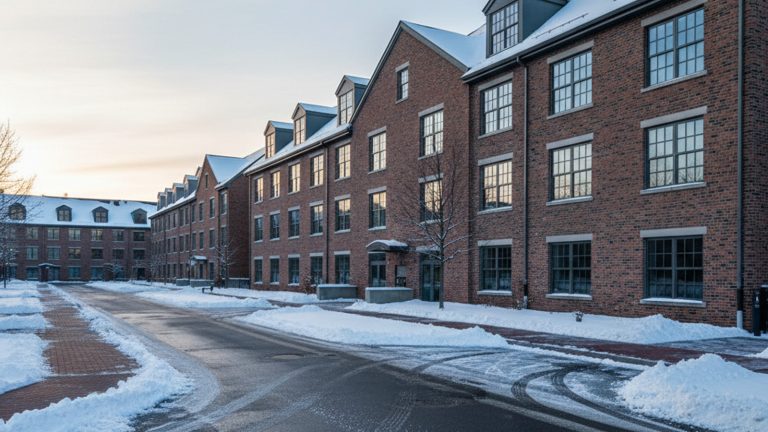
In Manchester, you will find historic architecture that doesn’t exist in the suburbs. The North End is famous for its grand Victorian homes and tree-lined streets. The West Side is known for “triple-decker” multi-family homes, which are popular with investors. Downtown offers converted mill lofts with exposed brick and high ceilings—perfect for young professionals.
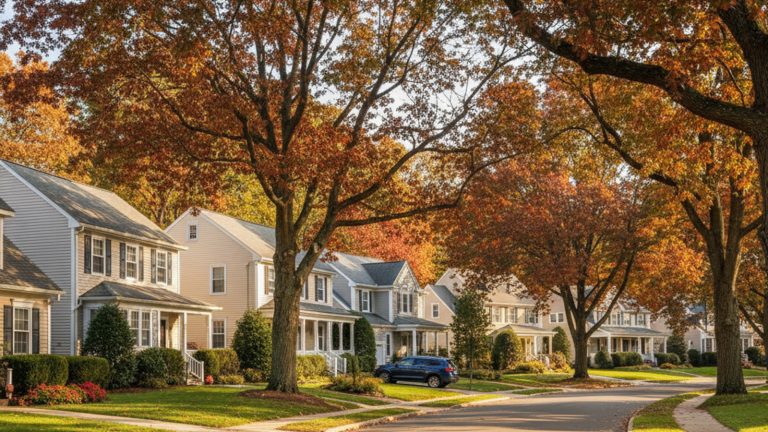
Merrimack’s housing boom happened later, so the inventory is different. You will see a lot of Split-Level and Colonial homes built between the 1970s and 1990s. Popular neighborhoods like Reeds Ferry offer a classic residential feel. South Merrimack has seen more recent development, with larger executive homes. In general, you get more land in Merrimack; the lots are larger and the neighbors are further away compared to the dense city lots of Manchester.
Final Verdict: Who is Each City Best For?
Choosing between these two neighbors usually comes down to lifestyle preference rather than just budget, since they are relatively close in cost.
Choose Manchester if:
- You want walkability and access to nightlife without driving.
- You appreciate historic architecture or industrial-chic mill lofts.
- You are looking for a lower purchase price entry point.
- You want quick access to the airport or the Seacoast via Route 101.
Choose Merrimack if:
- You want a quieter, woodsy suburban feel with more land.
- You commute to Boston or Nashua and want to shave time off the drive.
- You prefer newer housing stock (1980s and later).
- Low crime statistics are your number one priority.
Both towns offer the tax advantages of New Hampshire living, and because they border each other, you can easily live in the quiet of Merrimack and still enjoy a night out in Manchester.
Frequently Asked Questions
Generally, purchasing a home is cheaper in Manchester, where median prices are often in the mid-$400,000s compared to over $500,000 in Merrimack. However, renting can be more expensive in Merrimack due to limited inventory, whereas Manchester has a wide range of rental prices.
They are direct neighbors. You can drive from downtown Manchester to the center of Merrimack in about 15 to 20 minutes depending on traffic. This makes it very easy to live in one town and work or play in the other.
No, Merrimack does not have a traditional walkable downtown with a “Main Street” feel like Manchester or Nashua. Its commercial activity is spread out along Route 3 and centered around the Premium Outlets and various shopping plazas.
Merrimack is generally the better option for Boston commuters. It is located further south on the Everett Turnpike, which usually saves 10 to 15 minutes of driving time each way compared to starting from Manchester.
For the 2024 tax year, Manchester’s rate is approximately $19.58 per $1,000 of assessed value, while Merrimack’s is approximately $20.69 per $1,000. While the rates are similar, keep in mind that homes in Merrimack often have higher assessed values, which can lead to a higher total tax bill.