

If you are looking at the map of New England and trying to find a spot that balances urban convenience with access to the outdoors—without the Boston price tag—you have likely circled Manchester. Known locally as the “Queen City,” it is the largest city in Northern New England. For many people, it sits in that “Goldilocks” zone: big enough to have real jobs and restaurants, but small enough that you can be on a hiking trail or ski slope in twenty minutes.
The honest answer to whether Manchester is the right move for you usually comes down to value. You get a lot more house here than you would an hour south in Massachusetts. Plus, you get the “New Hampshire Advantage,” which means zero income tax on your wages and no sales tax on the things you buy every day.
That said, Manchester is a city, not a sleepy hamlet. It has city grit and city challenges alongside its historic charm. The short answer is yes, people successfully put down roots here every day, but where you choose to live within the city limits makes all the difference. Neighborhood selection here is everything.
Pros and Cons of Living in Manchester, NH with Kids
Life in Manchester is often about trade-offs. You are generally swapping the pristine polish of an expensive Boston suburb for a more diverse, lived-in community that leaves you with more cash in your pocket at the end of the month.
On the plus side, the financials are compelling. Housing costs here are often around 50% lower than the Boston metro area. You also have access to top-tier healthcare right in town with Elliot Hospital and Catholic Medical Center (CMC), which is a huge peace of mind for parents. And recreation isn’t just “nearby”—it is often right down the street. How many cities have their own ski area within the city limits?
However, you have to go in with your eyes open. The schools can be variable; while some elementary schools are strong, the district as a whole faces challenges typical of urban systems. You also have to deal with New England winters, which means budgeting for snow tires and heating oil. Crime rates in the city center are higher than in the quiet towns next door, though this drops off significantly as you move toward the residential outskirts.
At a glance:
- Pros: Significantly lower housing costs, no income/sales tax, skiing and hiking locally, and central access to mountains and beaches.
- Cons: School ratings fluctuate by neighborhood, downtown areas have higher crime rates, and winters are long and cold.
- The Reality: You get culture, convenience, and affordability, but you need to be strategic about where you buy.
Best Neighborhoods in Manchester, NH for Families
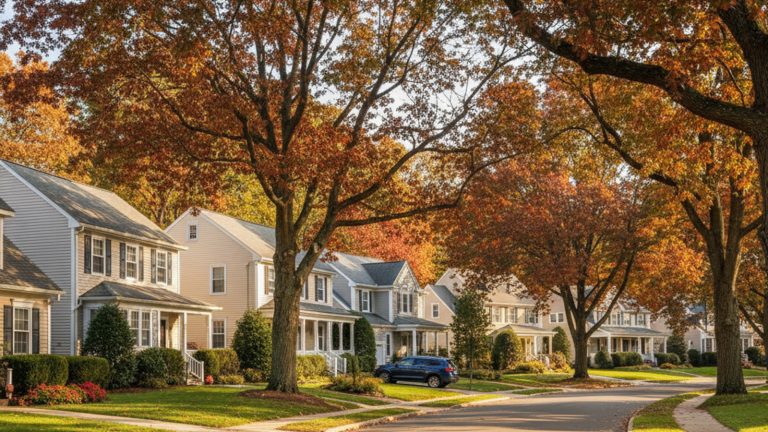
When buyers ask me about moving to Manchester, I always tell them to look at the “rim” of the city. The downtown core is dense and busy, but the outer neighborhoods feel much more like the quiet suburbs you might find in Bedford or Londonderry.
The North End This is arguably the most well-known residential area in the city. If you like historic character, this is where you look. You will find beautiful Victorian homes and tree-lined streets that are great for walking the dog or pushing a stroller. It has a prestigious, established vibe and puts you close to Webster Elementary.
Green Acres / South End If you prefer a classic mid-century suburban feel, check out Green Acres. This area is full of post-war Capes and ranches with decent-sized backyards. It feels very distinct from the city center and is generally quiet. Proximity to Green Acres Elementary is a big draw for households looking here.
Youngsville / Lake Massabesic For those who want to feel like they live in the country without leaving the city, Youngsville is the spot. Located near the eastern border, it offers a mix of rural and suburban living. You are right next to the lake and extensive trail systems, making it ideal if your weekends revolve around nature.
Wellington This area is incredibly practical for commuters because of its easy access to I-93 and Route 101. You will find more modern developments here compared to the older parts of the city. It is also convenient to the hospitals, which attracts a lot of medical professionals.
Smyth Road / Straw Hill Located in the northern part of the city, this area offers elevated views and some cool mid-century architecture. It is very close to McIntyre Ski Area and Derryfield Park, offering plenty of open green space nearby.
Navigating Schools and Education in Manchester
Education is usually the biggest topic of conversation for people moving here. The Manchester School District is large and diverse, and like many city districts, the “average” ratings you see online do not tell the whole story.
At the elementary level, neighborhood schools like Green Acres, Webster, and Highland-Goffes Falls often see strong involvement and higher ratings than the district average. It is common for buyers to target specific school zones when house hunting.
For high school, students typically attend Central, Memorial, or West depending on where they live. There are also specialized programs like the Manchester School of Technology that offer great hands-on career pathways.
If the public district isn’t the right fit, you have options. Many residents look at charter schools like The Founders Academy or Mill Falls Charter School. There is also a robust private school network, including Trinity and The Derryfield School. And with Southern New Hampshire University (SNHU) and UNH Manchester in town, the city has a growing higher-education culture that influences the local vibe.
Safety and Crime: What Parents Need to Know
Let’s address the safety question head-on. If you look at the raw data, Manchester has higher crime rates than the sleepy towns surrounding it. However, statistics can be misleading if you don’t look at the map.
Most of the crime in Manchester—particularly violent crime—is concentrated in the dense inner-city neighborhoods and downtown corridors. It is often not random; it tends to be targeted activity within specific groups. When you drive out to neighborhoods like the North End, Green Acres, or Youngsville, the atmosphere changes completely.
In these residential outskirts, the safety profile is much more comparable to a typical suburb. The most common issue homeowners face in these areas is usually property crime, like car break-ins if doors are left unlocked. My advice is always to check the specific street data and, more importantly, drive the neighborhood yourself on a Friday night to get a real feel for the noise and activity levels.
Family Fun and Things to Do in Manchester
One of the best parts about living in the Queen City is that you don’t have to leave town to have a good weekend. The amenities here are fantastic for keeping kids and teens active year-round.
For active households, McIntyre Ski Area is a local gem. You can drop the kids off for ski lessons or go tubing right in the city. Lake Massabesic is another major asset. While you can’t swim in it (it’s the city’s water supply), the kayaking and hiking trails around it are beautiful and very popular.
If you are looking for culture and learning, the SEE Science Center in the Millyard is famous for its massive LEGO project and hands-on exhibits. The Currier Museum of Art is also surprisingly accessible for younger visitors, offering youth programs and art camps.
Summer nights often revolve around Fisher Cats baseball games. The stadium is right by the river, and it’s an affordable, fun night out. For simpler days, parks like Livingston Park offer a pool, playground, and a nice loop around the pond, while Stark Park hosts outdoor concerts that draw a friendly crowd.
Cost of Living and Housing Market
Manchester is getting more expensive, just like everywhere else, but it remains a value haven compared to Massachusetts. The median home value generally hovers in the mid-$400,000s, though this varies wildly between a fixer-upper on the West Side and a colonial in the North End.
The housing market here is competitive because inventory is low. Single-family homes generally offer more square footage and yard space for your dollar than you would find south of the border.
You do need to budget for property taxes. New Hampshire property tax rates are among the highest in the country. This is the trade-off for having no income tax and no sales tax. When you crunch the numbers, many people find their total tax burden is still lower here, but that monthly mortgage payment might look a little tax-heavy compared to other states. You also need to watch out for utility costs; heating a home in New England is a real line item in the winter budget.
Manchester vs. Nearby Cities (Nashua, Concord)
If you are on the fence, you might be looking at Nashua or Concord, too.
Vs. Nashua: Nashua is physically closer to the Massachusetts border, making it a slightly shorter commute to Boston. It feels more like a sprawling suburb with heavy retail strips. Manchester feels more like a distinct city with its own center, nightlife, and identity.
Vs. Concord: Concord is the state capital and feels smaller and quieter. It is more government-focused and has a slower pace. Manchester is larger and grittier but offers significantly more in terms of dining, entertainment, and employment options within the city itself.
FAQ
Manchester is generally safe, but it has urban challenges. Safety varies significantly by neighborhood; the downtown area sees higher crime rates, while residential neighborhoods like the North End, Green Acres, and Youngsville are quiet and comparable to suburban towns.
While ratings change, schools like Green Acres Elementary, Webster Elementary, and Highland-Goffes Falls generally receive higher ratings from parents and third-party sites than the district average. Many parents choose their neighborhood specifically to be in these zones.
There is a bus system (MTA), but most households find it necessary to own a car. The bus routes are useful for getting around the city core, but they are not a viable substitute for a vehicle if you need to commute or manage a busy family schedule.
This is one of the city’s best features. You are centrally located: about 45 minutes to the Atlantic Ocean (Hampton Beach) and about an hour north to the White Mountains for serious hiking and skiing.