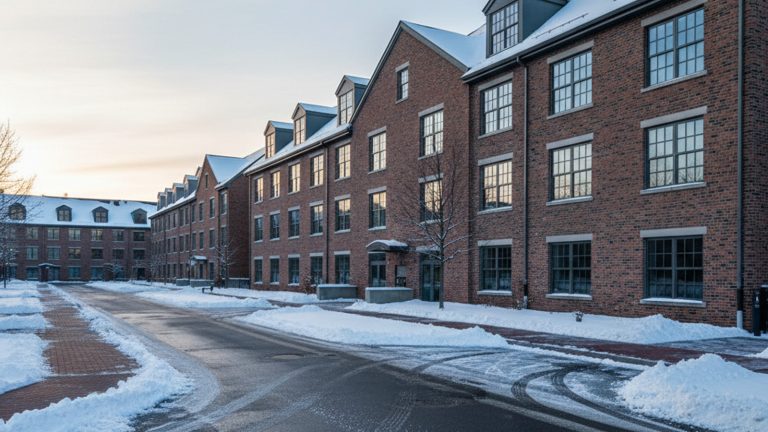

If you are thinking about living in Manchester NH, one of the first things you’re likely looking at is the paycheck. It’s one thing to fall in love with the historic brick architecture or the proximity to the mountains, but you need to know if the local economy can support your lifestyle.
The good news is that the “Queen City” is no longer just a sleepy manufacturing town. It has evolved into the economic engine of Northern New England, boasting a job market that is surprisingly diverse and resilient. Whether you are a nurse, a software engineer, or a finance professional, the landscape here is active.
Let’s break down what the job market in Manchester looks like today, who is hiring, and how far your salary actually goes in the Granite State.
Manchester Job Market Overview
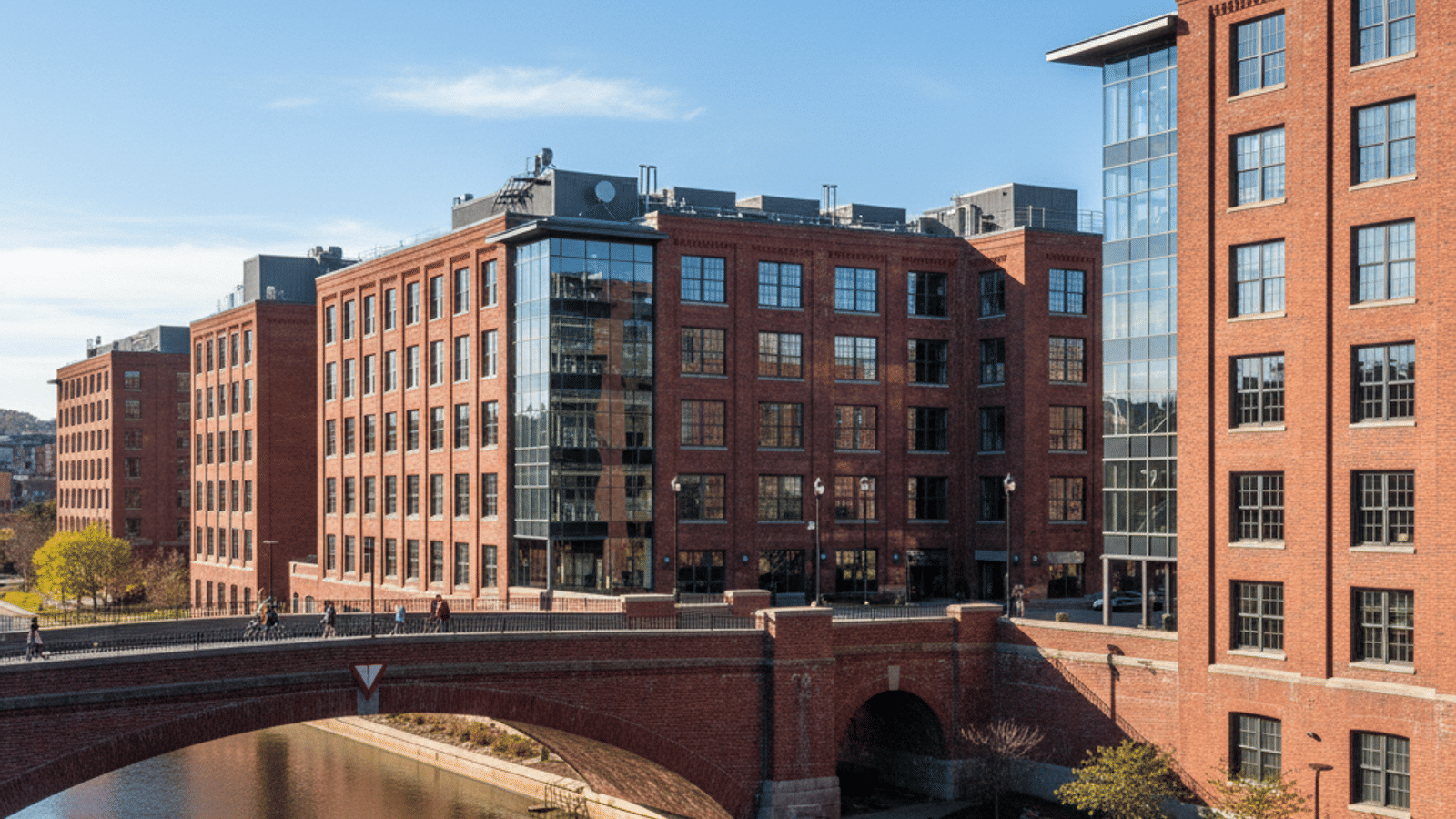
To understand where Manchester is going, you have to look at where it came from. For a long time, this city was defined by the Amoskeag Manufacturing Company—a textile giant. Today, those same historic mills along the Merrimack River have been converted into modern offices, labs, and universities, earning the area the nickname “Silicon Millyard.”
Currently, the market is incredibly robust. Unemployment rates in the area are historically low, frequently hovering between 2.5% and 3.5%, which is often significantly lower than the national average. This tightness in the labor market means that skilled workers are in high demand.
While Boston is the massive hub to the south, Manchester serves as a critical regional hub for New Hampshire. It draws talent not just from the city limits, but from the entire Merrimack Valley. If you are looking for stability, the transition from heavy industry to a service and tech-based economy has created a very sturdy foundation here.
Top Industries Driving Manchester’s Economy
When you look at the help-wanted ads in Manchester, you’ll notice a few specific sectors dominate the conversation. The economy here isn’t reliant on just one thing, which is great for long-term stability.
Healthcare is arguably the dominant force in the region. With major hospital systems located right in the city, medical professionals—from surgeons to support staff—have plenty of options. This sector anchors the local economy and provides thousands of steady jobs.
Technology and Biotech are the flashy newcomers that are growing fast. The “Silicon Millyard” isn’t just a marketing slogan; it’s home to initiatives like ARMI/BioFabUSA, which is pioneering the bio-manufacturing of human tissue. This has attracted a cluster of high-tech firms and startups to the riverfront.
Education also plays a massive role. Between Southern New Hampshire University (SNHU) and the University of New Hampshire’s Manchester campus, higher ed is a major employer. Additionally, Advanced Manufacturing has kept the city’s industrial spirit alive, but today it’s less about looms and more about precision aerospace and defense components.
Major Employers and Companies in Manchester
If you are polishing up your resume, it helps to know exactly who the heavy hitters are. While small businesses thrive here, several large organizations provide the bulk of the employment opportunities.
Elliot Health System is the city’s largest provider and arguably its most significant employer. If you work in healthcare, “The Elliot” is a household name. Close behind is Catholic Medical Center (CMC), another massive institution that employs thousands of locals.
In the education and corporate sector, Southern New Hampshire University (SNHU) is a juggernaut. While they have a massive online presence nationwide, their physical operations and campus are a huge source of local jobs, ranging from administration to IT and faculty roles.
For technology and innovation, DEKA Research & Development is the anchor of the Millyard. Founded by Dean Kamen (the inventor of the Segway), DEKA is constantly hiring engineers and problem solvers. Other key players include Eversource Energy, the region’s main utility provider, and Comcast, which has a significant operational presence in the area.
Salaries, Income, and Cost of Living
Here is where the math gets interesting for anyone considering relocating to Manchester. While salaries in Manchester might look slightly lower on paper compared to downtown Boston, the “NH Advantage” changes the equation significantly.
New Hampshire has no state income tax on W2 wages. When you compare a $90,000 salary in Manchester to a $90,000 salary in Massachusetts or New York, your take-home pay in New Hampshire is effectively higher because the state isn’t taking a cut of your paycheck.
In terms of averages, hourly wages often hover around the $33 to $34 mark, though this varies wildly by industry. It is important to distinguish between the city proper and the “Greater Manchester” area. Median household income within the city limits sits around $65,000 to $70,000, but when you factor in commuters living in nearby towns like Bedford or Hooksett, that median number shoots up significantly.
Overall, the cost of living in Manchester NH remains more affordable than the Greater Boston area. Your purchasing power—what you can actually buy with your dollar—is generally stronger here, especially regarding everyday expenses and utilities.
Commuting Options and Remote Work
You can’t talk about the Manchester job market without talking about Boston. The two economies are deeply linked.
A significant portion of Manchester residents commute to Massachusetts for work. The drive is roughly 50 to 60 minutes without heavy traffic, though rush hour can extend that. Many professionals choose to live in Manchester to get more house for their money while retaining a Boston salary. The main arteries, I-93 and I-293, make this access relatively straightforward.
Remote work has also exploded in popularity here. Because of the tax benefits and the lifestyle pace, many remote workers are choosing New Hampshire as their home base. If you need to travel for business, the Manchester-Boston Regional Airport (MHT) is a massive perk. It is incredibly easy to navigate compared to Logan, making business trips far less stressful.
How the Job Market Impacts Housing Demand
So, what does all this economic activity mean for real estate? Simply put, a strong job market drives housing demand.
Because unemployment is low and companies like DEKA and SNHU are stable, there is a consistent influx of people moving to Manchester NH. This keeps the housing inventory tight. When good jobs are plentiful, people feel confident buying homes, which supports steady property value appreciation.
The rental market is equally active, largely driven by young professionals in the tech and medical fields who want to live near the Elm Street downtown scene. If you are looking to buy, the competition can be brisk, but it’s fueled by a healthy local economy rather than speculation.
Frequently Asked Questions
The largest sectors are Healthcare and Social Assistance, driven by two major hospital systems. This is closely followed by Education, Retail Trade, and a rapidly growing Professional and Technical Services sector centered in the Millyard.
Yes, it is very popular for remote workers. The lack of state income tax on wages makes it financially attractive, and the cost of living is generally lower than in major metro areas like Boston or New York.
The unemployment rate in the Manchester area is typically very low, often ranging between 2.5% and 3.5%. It consistently performs better than the national average, indicating a tight and competitive labor market.
Yes, thousands of residents do this daily. It is roughly a 53-mile commute, which takes about an hour depending on traffic, allowing residents to earn Boston wages while enjoying the lower cost of living in New Hampshire.